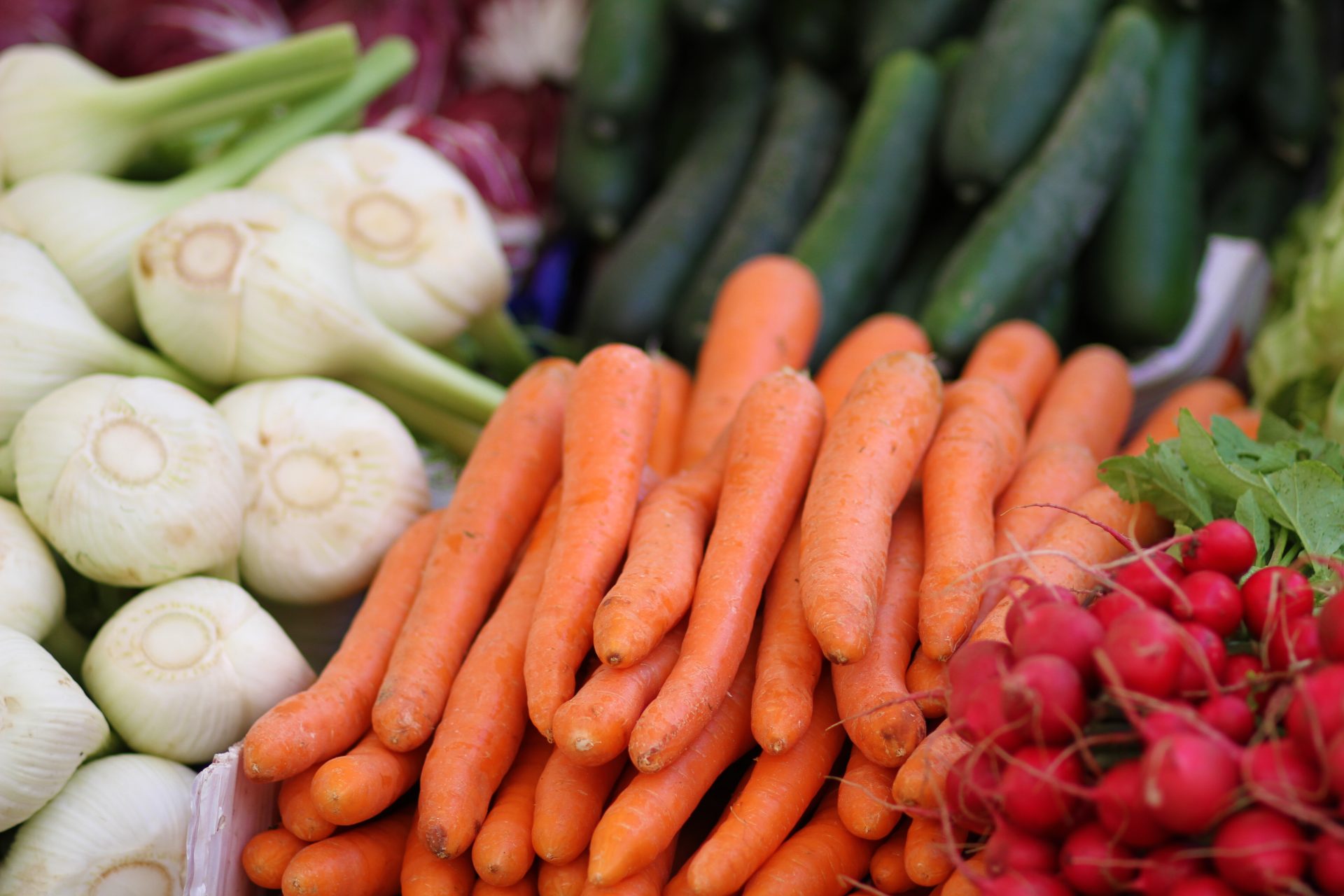
Official data confirm it: organic farming areas are increasing in Italy and Europe, driven by a market that increasingly demands certified organic food and by Europe, which promotes this production model through the Green Deal and Farm to Fork.
Indice
- Organic farming, a growing sector
- Organic and fertilization: what the regulation says
- Which fertilizers are allowed in organic farming?
- Why use organo-mineral fertilizers in organic farming?
- Fertilizing in organic farming: a reflection
- Agribios supporting organic farming
Subscribe to the newsletter
Subscribe now
Organic farming, a growing sector
Preliminary data from the report “Bio in Cifre 2025” (on the trend of organic farming in Italy in 2024), prepared annually by Ismea and Sinab, were released during the European Organic Day, celebrated on September 23, 2025.
In 2024, the organic sector confirmed its positive trend in Italy, recording increases in cultivated areas, number of operators, and domestic consumption. The Italian organic UAA reached 20.2% of the total (+0.4% compared to 2023), with 2,514,596 hectares cultivated (+2.4% year-on-year and +68% over the last decade), placing Italy third in Europe after Spain and France. Tuscany, Calabria, Sicily, Marche, Basilicata, Valle d’Aosta, Campania, and the autonomous province of Bolzano have already exceeded the European target of 25% of agricultural land under organic cultivation, while Lazio and Puglia are close to the goal.
Consumption is also growing: in 2024, domestic purchases of organic products in large-scale retail reached €3.96 billion, and provisional data for 2025 confirm the trend.
Organic farming is also a driver of innovation for the entire agricultural sector, so much so that a recent decree of MASAF established that in 2026 40% of funds for the development of organic production will be allocated to research and innovation programs.
Organic and fertilization: what the regulation says
The EU Reg. 2018/848 on organic production and labeling of organic products, in Article 12, Annex II, “Soil management and fertilization” states: “In organic plant production, soil tillage techniques and crop practices aimed at safeguarding or increasing soil organic matter content, improving its stability and biodiversity, and preventing compaction and erosion are used.
Soil fertility and biological activity are maintained and enhanced:
a) except for pastures or permanent grasslands, through the use of multi-year crop rotation, which must include legumes as main or cover crops and other green manure crops;
b) in the case of greenhouses or perennial crops other than forage, through the use of green manure crops and short-term legumes and plant diversity;
c) in all cases, through fertilization with livestock effluents or organic matter, both preferably composted, from organic production.
If crop nutritional needs cannot be met through the above measures, only fertilizers and soil conditioners authorized under Article 24 for use in organic production may be used, and only to the extent necessary.”
Article 24 lists the permitted materials, which are largely organic by-products from various production chains (manure, vinasse, guano, peat, etc.), thus contributing to the circular economy. Mineral products are allowed to a more limited extent, provided they are of natural origin, such as phosphates or sulfates.
Which fertilizers are allowed in organic farming?
In summary, fertilization interventions are allowed in organic farming and their main purposes are:
- maintaining or increasing the soil organic matter content;
- stimulating microbial biodiversity and the resilience of the soil-plant system;
- preventing nutritional imbalances and soil degradation phenomena;
- promoting the gradual release of nutrients, in line with crop physiological needs.
To fertilize in organic farming, soil conditioners, organic fertilizers, and natural mineral fertilizers can be used.
Organic fertilizers are recommended because they help maintain organic matter and sustain the biological nutrient cycle. However, in some soil and/or production contexts, it may be appropriate to supplement with natural mineral sources, especially to address specific nutrient deficiencies (such as phosphorus, potassium, or trace elements).
Therefore, it is possible to use organo-mineral fertilizers in organic farming, provided they contain components permitted by current regulations.
Why use organo-mineral fertilizers in organic farming?
The choice to use organo-mineral fertilizers in organic farming is based on several agronomic and management advantages:
- nutritional balance: organo-mineral fertilizers ensure the availability of macro- and micronutrients in balanced doses compatible with crop physiology;
- starter effect: the mineral fraction provides immediate support when needed;
- synergy in mineralization: the coexistence of humified organic matter and mineral compounds promotes microbial activity responsible for mineralization, accelerating nutrient release;
- reduction of losses and leaching: highly humified organic components retain mineral nutrients, limiting losses and facilitating root absorption. This maximizes fertilizer use efficiency while reducing the environmental impact of fertilization practices;
- versatility and adaptability: organo-mineral formulations can be tailored to specific soil types, cropping environments, and production needs, minimizing waste and inefficiencies.
Fertilizing in organic farming: a reflection
The overall soil fertility, its maintenance, as well as its improvement and regeneration, particularly regarding the biological component of such fertility and consequently the vitality of cultivated soils, is a fundamental element of organic farming.
A living and vital soil will be better able to meet crop nutritional needs with external inputs—where necessary—limited to products allowed in organic farming, excluding synthetic products.
Even more than in integrated farming, fertilization in organic farming is a strategic crop practice. This is not only because of its direct influence on the nutritional performance of cultivated soils but also because a fertile soil, with a balanced meso- and microbiota, will promote a better plant health status, resulting in fewer biotic issues and less need for crop protection interventions. This advantage is particularly significant in organic farming, given the limited number of crop protection solutions allowed compared to those available in integrated farming.
Agribios supporting organic farming
The high-quality organic matrices used in the formulation of Agribios-branded soil conditioners, organic fertilizers, and organo-mineral fertilizers make them ideal products to support organic farming.
Agribios not only rejects the use of organic waste with inadequate composition that could cause soil imbalances but also processes organic matrices using methods that maximize their fertilizing quality and humification rate, subjecting them to long natural maturation processes and avoiding the use of ovens.
Added to this is extensive experience in producing fertilizers inoculated with beneficial microorganisms, which combine humified organic matter with a living organic component capable of directly and indirectly contributing to the increase and regeneration of soil biological fertility, essential for maintaining long-term profitability in organic production.
Prodotti correlati

Biocomplex
Organo-mineral fertilizers

Biocomplex
Organo-mineral fertilizers

Biocomplex
Organo-mineral fertilizers

Subscribe to the newsletter
Subscribe now
