Field trials •
13 November 2024

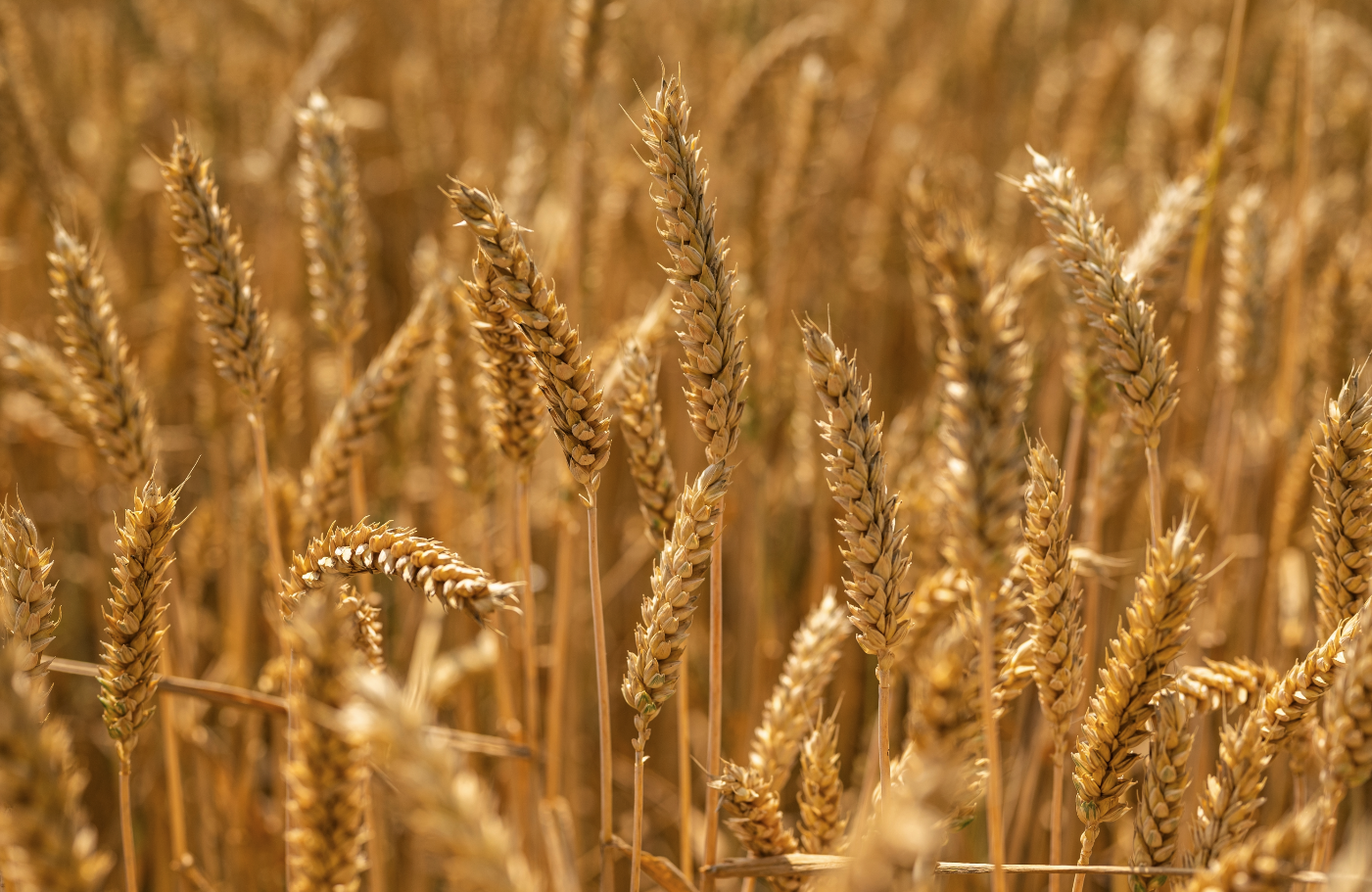
Organic fertilization of soft wheat

In several previously published in-depth studies, we dealt with nutritional needs and fertilization of cereals.

In this specific case, here we have focused on how, for autumn-winter cereals, the phases of sowing, germination, emergence and tillering occur in the autumn season and require particular attention from a nutritional point of view. In fact, if in pre-sowing basal fertilization is carried out (which sometimes remains the only one), applications can equally be contemplated at the time of sowing (with fertilizers with localized distribution and starter effect) and at tillering (with products able to meet both the immediate needs of the plant and, in part, those of the subsequent phases, from germination onwards).

The role of macroelements in cereal nutrition

In this other in-depth study, we focused on the role played by macroelements in cereal nutrition.

Nitrogen stimulates plant growth and improves grain quality. In case of deficiency, stunted growth and chlorotic pigmentation of the leaves occur, while an excess causes lodging. Nitrogen distribution is normally split into two – three applications.

Phosphorus also has a positive effect on plant growth, with greater needs during the early stages of development. Deficiency results in stunted growth and anthocyanin pigmentation of the leaves. As is known, phosphorus is characterised by poor mobility in the soil, with a greater problem in the case of acid pH (retrogradation and formation of precipitates of iron and aluminium phosphates) and alkaline pH (insolubilisation from the formation of tricalcium phosphate). This evidence makes localized distribution desirable during pre-sowing.

Potassium stimulates photosynthesis and the deposition of photosynthetic agents in the grain, as well as affording resistance to cold and drought, optimising the use of available water. It also makes the plant more resistant to pathogen attacks and lodging, improving the cellular structure.

Fertilization of soft wheat: the results of a test

In the table below, we show the results of a comparative fertilization test on the Teorema type of soft wheat in organic cultivation, carried out during the years 2023 and 2024 at the Azienda Agricola Verucchi in Anzola Emilia (BO), with a description of the contrasting cases.

Case Pre-sowing Post-sowing Coverage (early)
Test (not dealt with) – – –
Agribios Superoro 3 qt/ha – Biodieci 6 qt/ha
Cases 1 and 2 Product of another brand, same fertilizer units – Product of another brand, same fertilizer units


Case Product qt/ha Field average Hectolitre Weight Field average Protein % Field average
Test Not dealt with 62.5 86 79.7 99 15.7 100
Agribios 80.0 110 81.1 101 15.8 101
Case 1 69.5 96 79.7 99 15.2 97
Case 2 75.5 104 81.1 101 15.6 100


The results obtained allow us to make two considerations.

The first and most banal, but perhaps not entirely: fertilization in cereal cultivation is essential to obtain economically interesting yields.

The second: the Agribios case shows a unit production that is higher than the field average and that of the best performance obtained with other organic fertilizers, equal fertilizing units. This makes it possible for us to affirm that the quality of the organic matrix used in the formulation of fertilizers plays a fundamental role, which is by no means to be taken for granted.

Added to this is the fact that the Agribios Superoro fertilizer is produced with ECO BOOSTER technology, capable of enhancing the positive effect on soil fertility.

But let’s proceed in order.

What is Superoro?

Superoro is an organic fertilizer whose most important characteristic is that the Nitrogen and Phosphorus it is rich in, being linked to protein molecules, are not directly usable by plants but are made available gradually and with rhythms tuned to the nutritional needs of crops. These elements are not leached and insolubilized in the soil, as happens with mineral fertilizers, and they promote exceptional biological activity. The first nitrogen needs of crops are provided by amino acids, then by peptides and finally by proteins. The same considerations can also be extended to Phosphorus. The effect of Superoro on promoting the growth of microbial activity in the soil is also quite significant. The protein materials it is composed of are, in fact, the only nitrogenous food that can be used by heterophilic microorganisms. The activity of microorganisms is also reflected in the solubilization of bone phosphates contained in Superoro. This avoids insolubilization and favours the bioavailability of Phosphorus for plants.

Superoro is permitted for use in organic farming.

What is Biodieci?

Biodieci is an organic nitrogenous fertilizer obtained by the cold pelleting of a mixture of four different sources of partially hydrolyzed animal proteins. The size of the natural organic molecules that contain nitrogen allows for gradual release, with prolonged availability for the plant over time. Specially designed for organic farming but also successfully used in conventional farming, Biodieci is applied to the surface of all herbaceous or arboreal crops that require nitrogen inputs. It is also the ideal substrate for improving the microbial activity of soils.

Biodieci is permitted for use in organic farming.

What is ECO BOOSTER?

Taking advantage of decades of experience in the formulation of organic and organo-mineral fertilizers based on high-value organic matrices, Agribios Italiana has developed ECO BOOSTER, a fertilizer substrate activated by exclusive controlled fermentation processes of natural substances, rich in valuable metabolites, active enzymatic components and microbial growth modulators. Added during the processing phase, ECO BOOSTER optimises biodegradation reactions and stabilization processes, keeping the most precious nutritional and bioactive components intact.

The end product is a fertilizer of the highest quality, able to interact positively with the processes underlying soil fertility, promoting the growth of useful microbial species. The effect is, therefore, on the useful microorganisms already present in the soil, whose activity is stimulated, and possibly on those added when inoculated fertilizers are used.

Fertilizers produced with ECO BOOSTER technology regenerate worn-out soils, promote humification processes and promote the rapid degradation of ligno-cellulosic residues, as well as residual pollutants. They also promote root development, increasing the plants’ resistance to water and climate stress and the assimilation processes of macro and micronutrients.


Subscribe to the newsletter

Subscribe now
immagine icona della newsletter
Agribios Italiana s.r.l.
Yara