In modern olive growing, which in Italy must cope with strong pedoclimatic variability, alternate bearing, frequent summer water stress and an increasing incidence of extreme weather events, nutrition must be planned as an integrated management of soil fertility, organic matter and the vegetative-productive balance, rather than as a simple response to the crop’s nutritional requirements. The figures reported below describe an economically significant supply chain, yet one that is agronomically fragile: production stability increasingly depends on the ability to maintain living, well-structured soils capable of retaining water and nutrients.
Crop focus
•
23 July 2026
23 July 2026
Olive tree fertilisation: organic matter makes the difference

Indice
- Italian olive growing in numbers
- Macro- and micronutrients: the nutritional requirements of the olive tree
- Fertile soils for efficient olive growing
- Timing and methods for fertiliser application in olive groves
- Organic olive grove fertilisation
- Agribios tips
Subscribe to the newsletter
Subscribe now
Italian olive growing in numbers
Italy plays a central role in the global olive oil market: according to ISMEA sector data updated to 2025, Italian exports reached 344 thousand tonnes in 2024, worth more than €3.09 billion, while national olive oil production stood at 248 thousand tonnes, down 24% compared to the previous season.
The sector includes around 620,000 farms, more than 4,240 active olive mills and over 1.1 million hectares of olive groves, of which approximately 24% are organically managed.
Alongside the olive oil sector, table olive production represents a specialised yet agronomically significant niche: industry estimates indicate that Italian production has stabilised at around 70,000 to 72,000 tonnes of table olives per year, while domestic consumption exceeds production and structural imports remain necessary.
When compared with the total olive production required to obtain Italy’s olive oil output, assuming an average oil yield of 15 to 20%, table olives can be estimated to account for approximately 4 to 6% of total olive production.
In terms of cultivated area, there is not always a clear statistical distinction between olive groves for oil production, table olive groves and dual-purpose orchards. However, given the overwhelming prevalence of olive groves intended for oil production and the limited specialisation of table olive cultivars, the area permanently dedicated to table olive production can be estimated at only a few percentage points of the national olive-growing surface, likely below 5%.
Macro- and micronutrients: the nutritional requirements of the olive tree
Nitrogen is the nutrient most directly linked to vegetative growth, the formation of fruitful shoots and fruit set, but it is also the element most likely to cause imbalances. Excessive Nitrogen, especially when supplied in readily available forms, can increase vigour, delay ripening, reduce productive efficiency and increase susceptibility to biotic stresses.
Phosphorus is required in smaller quantities than Nitrogen and Potassium, yet it is crucial for energy metabolism, root development, flowering and microbial activity in the rhizosphere. In calcareous soils, its availability may be limited due to fixation processes; conversely, in soils with high organic matter content and good biological activity, mineralisation and the possible presence of mycorrhizal fungi can improve its availability.
Potassium plays a key role in osmotic regulation, assimilate translocation, drought tolerance, oil accumulation and drupe quality. In irrigated or highly productive olive groves, Potassium requirements increase significantly and the soil’s natural reserves may not be sufficient.
Among micronutrients, Boron deserves particular attention because of its role in flowering, pollen germination and fruit set. Subclinical deficiencies may result in poor flower fertility, fruit drop and irregular production.
Iron, Zinc and Manganese availability are often influenced by soil pH and active limestone content.
Foliar fertilisation can be useful at specific phenological stages, but it does not replace root-zone soil fertilisation: it is a corrective or supplementary tool, not the foundation of the nutritional programme.
Fertile soils for efficient olive growing
A technical olive fertilisation programme should always start with analytical data, including soil analysis.
In calcareous soils, which are widespread in Italian olive-growing regions, high pH may reduce the availability of Iron, Zinc, Manganese and Boron. In light-textured soils, on the other hand, the main risks are nitrate Nitrogen leaching and limited retention of Potassium and water.
Leaf analysis complements soil analysis because it measures the actual nutritional status of the tree. In olive growing, it is particularly useful for evaluating nutritional balance in terms of Nitrogen, Potassium, Boron, Calcium, Magnesium and micronutrients.
Sampling must be standardised in terms of timing, position and shoot type, avoiding abnormal trees or non-representative areas of the grove. The goal is to develop a nutrient balance consistent with expected production, vigour, orchard age, cultivar, planting density, water availability, ground cover management and the initial fertility level of the soil.
The olive tree’s response to fertilisation is often slow, cumulative and highly dependent on soil conditions. A compacted soil with low organic matter content, poor microbial activity and limited porosity can reduce fertiliser use efficiency, even when nutrients are applied at the correct rates.
In Mediterranean olive-growing soils, organic matter content is often a limiting factor, especially where repeated tillage, erosion, lack of cover crops and insufficient return of plant residues have depleted the topsoil layer.
For this reason, the use of organic and organo-mineral fertilisers in olive growing plays a strategic role. Naturally, the quality and composition of the organic matrix used in fertiliser production are essential in determining effectiveness. Performance is influenced by factors such as organic Carbon content on a dry matter basis, organic Nitrogen content, the C/N ratio and the humification rate.
Timing and methods for fertiliser application in olive groves
In general, base or maintenance fertilisation of olive trees is carried out between late winter and early spring, before vegetative growth resumes, allowing rainfall to activate the organic or organo-mineral fertiliser.
The period preceding flowering and fruit set requires particular attention. Olive trees need sufficient Nitrogen to support shoot growth and flower fertility, but not excessive amounts that would favour vegetative growth at the expense of fruit production.
After fruit set, nutrition should support drupe growth and oil accumulation, with particular attention to Potassium, Boron and plant water status.
In irrigated and high-density olive groves, fertigation can complement soil fertilisation; however, even in these systems, the organic component remains important for maintaining soil structure, porosity and buffering capacity.
In rainfed systems, water availability strongly influences organic matter mineralisation: late applications in the absence of rainfall may reduce treatment effectiveness.
From an operational perspective, localised application beneath the canopy projection is often more efficient than broadcasting fertiliser across the entire surface, especially in traditional olive groves with wide spacing.
Where ground cover is present, temporary competition for Nitrogen should be considered. Herbaceous biomass may immobilise nutrients during growth, but after mowing it returns organic matter to the soil and improves soil protection.
The most advanced approach integrates fertilisation, cover crop management, the incorporation of shredded pruning residues and repeated soil and leaf analyses.
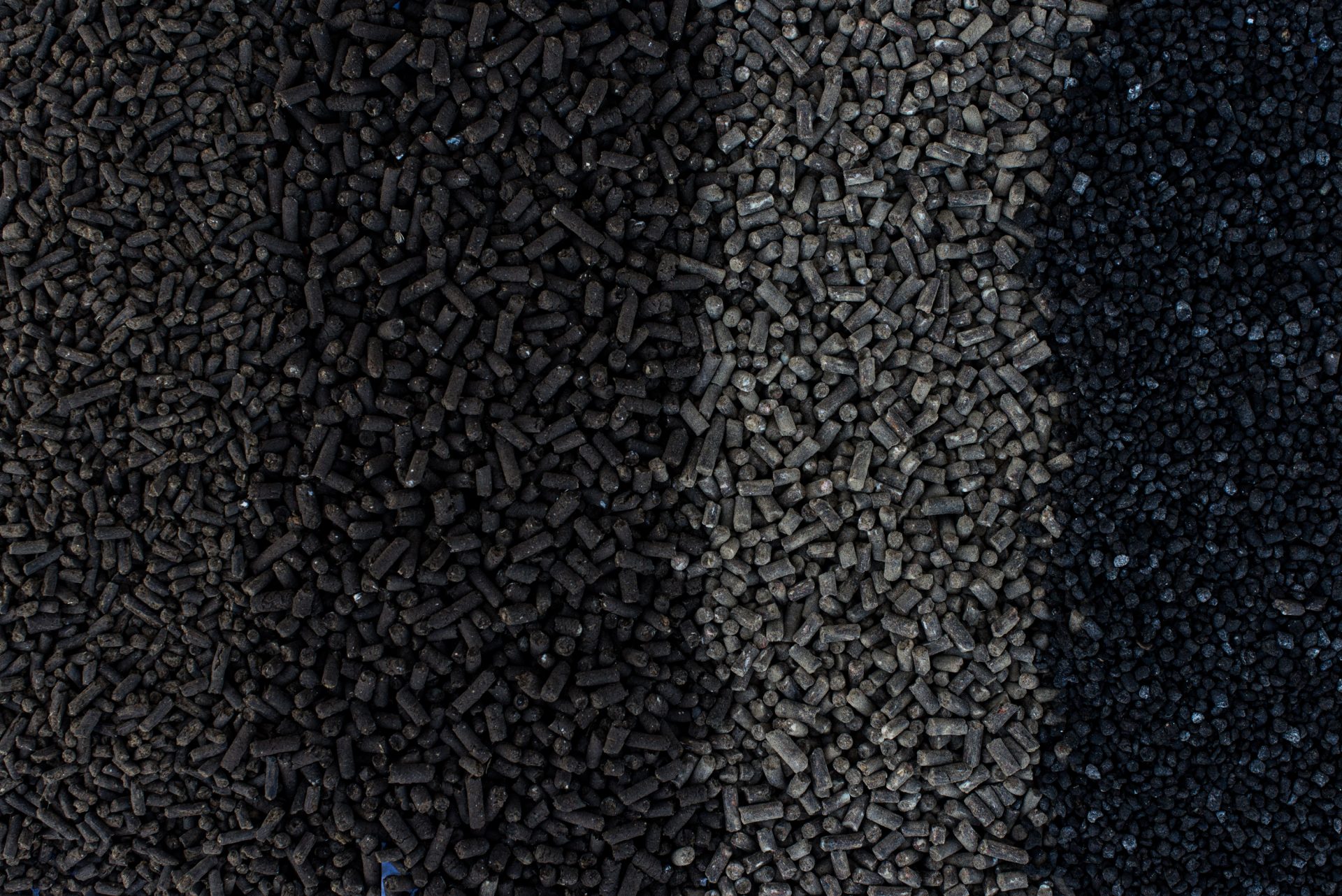
The use of pelleted fertiliser in olive growing offers several advantages: ease of storage, accurate dosing and efficient distribution with fertiliser spreaders, reduced dust formation and greater uniformity compared with powdered products.
In hilly or terraced areas, where fertiliser application can be challenging, pelletised formulations simplify field operations. However, pellet quality is crucial: overly hard pellets may degrade slowly in dry conditions, while excessively fragile pellets may lead to uneven distribution.
The ideal formulation combines physical stability, gradual degradability and, naturally, a nutrient content aligned with the requirements of the olive grove.
Organic olive grove fertilisation
According to estimates from ISMEA and SINAB, organic olive cultivation in Italy covers approximately 280,000 hectares, accounting for just under one-third of the national area devoted to this crop. Apulia, Calabria and Sicily host the majority of organic olive groves.
Organic olive grove fertilisation involves the use of specifically authorised products, primarily organic and organo-mineral fertilisers.
Organic fertilisers for olive trees are used both in certified organic orchards and in conventional farms seeking to reduce the impact of mineral fertilisers and improve soil fertility.
Agribios tips
Biolivo is an organic fertiliser specifically developed for olive trees, produced through the homogeneous blending of humified manures and partially hydrolysed meat meal, enriched with Boron.
Cold blended and pelletised, Biolivo is ideal for both organic and conventional olive fertilisation because it combines the benefits of humified manure with the contribution of hydrolysed proteins rich in amino acids, together with Boron, a micronutrient essential for olive nutrition.
Humified manure, rich in humic and fulvic acids, promotes optimal soil microbial activity and improves nutrient utilisation, while hydrolysed meat meal supplies amino acids, hormones, enzymes and vitamins.
Agriolivo Basic provides, in a single application, the mineral fraction (containing slow-release Nitrogen, Phosphorus and Potassium), a significant quantity of highly humified organic matter and secondary nutrients.
The organic matrix consists of a blend of highly humified manures of the highest quality, naturally fermented for approximately 180 days in a covered and ventilated environment.
This extended maturation period reduces moisture content, enriches organic matter with humic acids, neutralises pH and sanitises the material, making it free from nematodes, Salmonella, pathogens, antibiotic residues and weed seeds.
Biocomplex 6.8.12 is produced from a blend of organic fertilisers with high levels of Nitrogen and Phosphorus, combined with Potassium sulphate, resulting in a complete organo-mineral fertiliser supplying all the nutrients required by plants in an ideal balance.
Biocomplex 6.8.12 ensures both immediate and long-lasting fertilising action through the gradual release of all contained organic Nitrogen, allowing a single application at the beginning of the crop cycle.
It also promotes intense microbial activity in the soil. The presence of free amino acids provides a biostimulant effect in synergy with humic acids, enabling rapid recovery of root activity even under unfavourable conditions, such as temperature stress.
Agriazoto 300 is a high-analysis Nitrogen organo-mineral fertiliser designed for the optimal nutrition of Nitrogen-demanding crops.
The specific composition of its organic matter and the forms of Nitrogen contained ensure a rapid yet gradual release of the nutrient, supporting crop growth and nutritional requirements throughout development.
The organic matrix of Agriazoto 300 helps maintain soil fertility and protects Nitrogen against losses caused by volatilisation and leaching.
Prodotti correlati

Biolivo
Organic fertilizers

Agriolivo Basic
Organo-mineral fertilizers

Biocomplex
Organo-mineral fertilizers

Agriazoto
Organo-mineral fertilizers

Subscribe to the newsletter
Subscribe now
