Organic and organo-mineral fertilizers: pelleted fertilizers are better

In a previous in-depth article, we outlined a possible logical and operational path to follow when choosing the most suitable fertilizer to meet the nutritional needs of our crops, considering specific cultivation environments and production objectives.

Everything can be perfected and improved. The aforementioned article, for example, did not address a crucial point in the choice of fertilizers, namely the distinction between solid granular fertilizers and solid pelleted fertilizers.

Both formulations offer advantages over the powder form, which makes uniform field distribution difficult. However, if it is possible to formulate fertilizers (and even soil improvers) in both forms, there must be a reason. And there will naturally be differences between the two.

Assuming that these differences may not be well known to operators, let’s clarify them here.
Solid fertilizers: which ones are pelleted and which ones are granular?

As emphasized by Professor Claudio Ciavatta in an article published in issue 5/2024 of L’Informatore Agrario (“Pellet or Granule Fertilizer? A False Agronomic Dilemma”), the granule or pellet formulation of solid fertilizers can be divided according to product type as follows:

  • Mineral fertilizers are marketed granular;

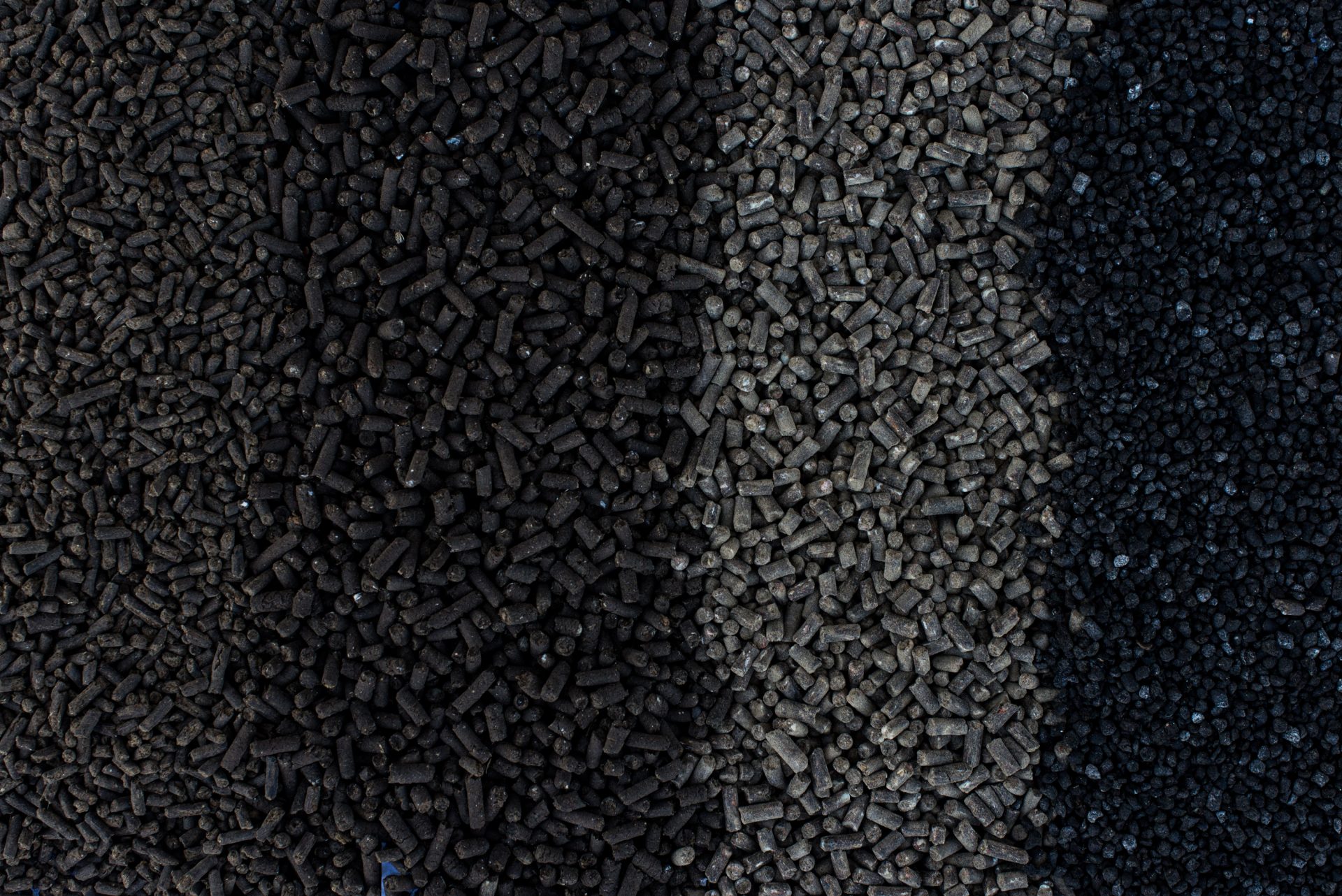
  • Organic fertilizers and soil improvers are almost always pelleted;

  • Organo-mineral fertilizers can be either granular or pelleted.

All forms are permitted by current regulations.

Organic matter and pelleting

Choosing one technology over another primarily means considering processing temperatures. In granulation, temperatures are significantly higher than those used in pelleting, making the granule formulation less suitable for organic fertilizers and soil improvers, where the functions performed in the soil by the organic matrix can only be maintained if it is not “stressed” by high temperatures. This is even more relevant for fertilizers inoculated with microorganisms.

The agronomic advantages of pelleted organic and organomineral fertilizers

In the specific case of organo-mineral fertilizers, pelleting — in addition to preserving the organic fraction — also ensures the establishment of what Ciavatta defines as an “intimate” bond between the product’s organic and mineral fractions. This results in better protection of the nutrients contained in the mineral fraction and a more gradual release over time. Such protection, besides providing prolonged nutritional support to crops, reduces the chances of nutrients not absorbed by the roots being lost through leaching or volatilization.

This aspect related to the use of pelleted organic and organo-mineral fertilizers has long been studied with reference to nitrogen, as demonstrated by various publications in the literature: for example, this article on the use of pelleted organic nitrogen fertilizers in wheat production and this research focused on the use of such products in potato cultivation.

Furthermore, pellets — despite existing in different sizes — are usually larger than granules. This, for all three categories of products that can be formulated as pellets (organic fertilizers, soil improvers, and organomineral fertilizers), promotes greater protection and a more gradual release of nutrients.

But there is another important advantage, especially in this historical period in which agriculture is facing considerable irregularity and unpredictability of rainfall due to climate change: the pellet retains more water inside than the granule. The release of this water in the rhizosphere can enhance nutrient bioavailability and reduce the risk of soil salinization.

Respect for the organic matrix: a cornerstone for Agribios

The organic matrices used by Agribios for the formulation of soil improvers, organic fertilizers, and organomineral fertilizers undergo a long natural maturation process, which does not involve the use of drying ovens. During this process, humification processes occur that make these matrices extremely rich in humic and fulvic acids (up to 14%). These are fundamental — as we explained here — to ensure both the transport of nutrients to plant roots and the stimulation of beneficial soil microflora.

Only when all optimal chemical, physical, and microbiological parameters (moisture, pH, humic acid content, and absence of pathogens) are achieved are these matrices used in Agribios productions.

Such valuable matrices deserve rigorous and respectful treatment even in downstream phases after maturation: for this reason, pelleting at Agribios is also carried out at low temperature.

This guarantees the production of pellets that will prove highly effective once distributed in the field.


Subscribe to the newsletter

Subscribe now
immagine icona della newsletter
Agribios Italiana s.r.l.
Yara