Crop focus •
26 August 2024

Fertilize the new vineyard properly for an optimal start

Building a new vineyard, whether it’s replanting or new planting land that previously did not house the vine, involves a series of operational choices that will strongly affect the achievement of a given oenological objective.

In other words, the type of wine that you intend to produce must guide the choices of what to cultivate (variety-rootstock combination or simply variety, where free-standing viticulture is possible), where to cultivate it (site) and how (cultivation technique).

When to replant and why?

The replanting and planting of new vineyards are carried out between the fall and spring, depending on the temperatures of the site: where the climate is colder, planting in spring is advisable. However, temperatures are not the only discriminant factor: the water content of soils is also fundamental. Dry soils, or on the contrary excessively humid ones, can greatly reduce the percentage of taking root.

The reasons why the winegrower decides to replace a vineyard of a certain age are the result of technical, economic, qualitative and market considerations.

Given that in most cases at around 25 years of age, on average, a grafted vineyard (the considerations change in the event of free-standing viticulture) no longer guarantees a positive income because it enters the senescence phase – in truth this could happen for various reasons (phytoiatric problems and related failures, damage to support structures, ways of farming and/or varieties that are no longer in line with oenological objectives…) –  harvesting younger vineyards may be necessary. Just like, more and more frequently and where there are real supporting reasons, there is a tendency to extend the life of a vineyard as much as possible to take advantage of the vegetative-productive balance and resilience that is established in old vines, as well as the compositional balance of the grapes produced.

Knowing the soil that will house the vineyard

Sufficiently analyzing the soil in which the cuttings will be planted is essential for understanding its chemical-physical characteristics, and to better prepare it to house the roots of young plants. This means verifying at least the content of the main nutrients, the organic matter content and the grain size, or the size distribution of the mineral particles.  The measurement of these and other parameters may provide, directly or indirectly, information on other extremely important characteristics of the soil, such as its cation exchange capacity, its ability to hold water or not, its porosity and so on.

Soil analyses are also useful in identifying any need for pH correction (both acidic and basic pHs can be problematic) or for salinity management (for example in coastal areas). They are also useful for providing indications on soil viability and its biological fertility, which can also be measured by observing the mesofauna present, or carrying out microbiota analysis.

Preliminary operations

Although underlining it may seem almost a stretch, it is worth remembering that in the case of replanting (vine following vine), the first and most important preliminary operation should be to rest the soil, for at least a year, preferably for two to three years. The purpose of resting is to reduce the load of pathogens and parasites present in the soil, which in this period of time can either be simply processed or sown with biocidal essences, such as some Brassicaceae, or with essences capable of counteracting the spread of weeds. Resting the soil is also useful to ensure the drying of the remaining portions of roots in the uprooted vineyard. However, there are often no practical conditions to wait and replant: considering the fact that in the first 2-3 years of the vineyard’s life, the grapes can hardly be vinified, the production times are likely to be extended excessively, with a significant increase in costs for the producer.

Soil analyses, carried out in such a way as to return results representative of the spatial variability of the plot, horizontally and in depth, are preparatory not only to the evaluation of the chemical, physical and biological characteristics of the soil, but also to technical choices in terms of mechanical processing (trenching, to be avoided when possible; ripping; fine crushing of the surface layer), of carrying out water management works (drainage) and of the most appropriate positioning choice, if the vineyard is on a slope (trellis, spiral, cross, terrace…). These, in a nutshell, represent the preliminary operations with respect to the planting of the cuttings, to which an equally important one is added, namely the so-called base fertilization.

Principles of base fertilization of the vineyard

Base fertilization of the vineyard is defined as what is carried out during the pre-planting phase to enrich the deeper layers of soil with nutrients, where the roots can feed once they have developed, and contribute to the creation of an environment favouring the development of said roots.

Two elements in particular, Phosphorus and Potassium, need to be distributed in depth because later, if distributed on the surface or slightly buried, they will struggle to reach the deepest layers: Phosphorus because it is subject to retrogradation to insoluble forms (dicalcium and tricalcium phosphate) and therefore immobilized, Potassium because it is characterized by low mobility in clay soils.

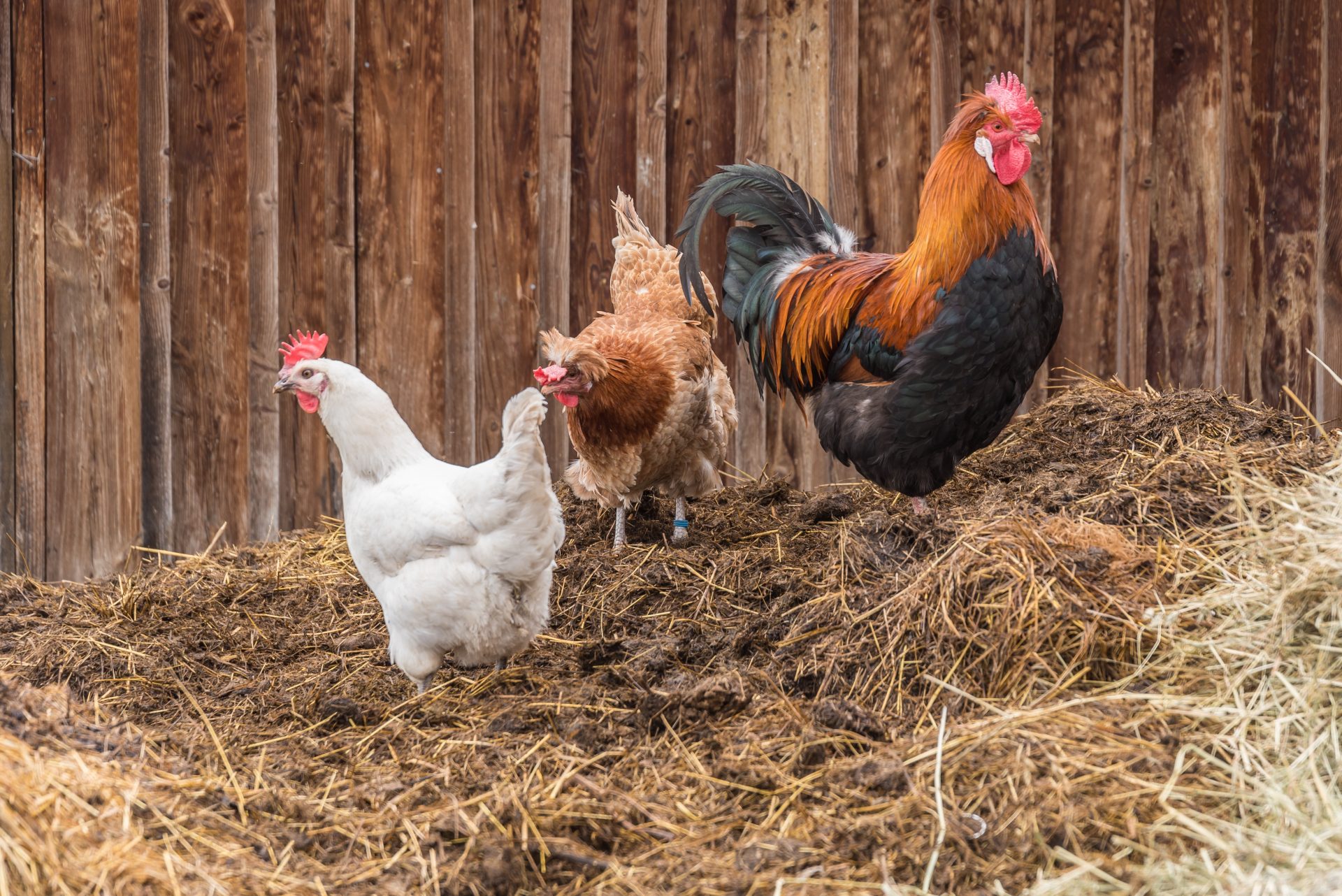
Since background fertilization supports plant nutrition for a long period, the release of nutrients must be prolonged over time. For this reason, historically, using manure for the base fertilization of vineyards has always been advised, and today we recommend organic or organo–mineral fertilizers, or in any case slow release ones.

These explanations must be understood as general considerations, which require appropriate changes based on the production context. In the presence of mostly sandy soils, for example, given the high mobility and leaching of the nutrients, we do not recommend carrying out base fertilization. You should instead aim for surface distributions on the plant, preferably fractional.

Even in the event of base fertilization, however, at the planting phase and during the first years of life, the nutrition of the plants must be particularly cared of, taking into consideration the poor development of the root system and the need for plant growth. We would like to emphasize the opportunity to exploit the beneficial effect of certain useful microorganisms of the rhizosphere, symbionic and not, able to increase the bioavailability of nutrients – thanks to the mineralization of organic matter and the mobilization of insoluble forms of phosphorus – and to create an environment more favorable to the development of the young plant, also from a phytosanitary point of view (for example by exerting antagonistic actions against telluric pathogens).

Agribios tips

Agri Bio Aktiv is a soil activator made of  humidified organic matter and bacterial and fungal inoculums. In addition to providing organic matter and nutrients, it promotes and directs the proliferation in the soil of microorganisms useful for the development of plants. Furthermore, its particular microbial composition, rich in Trichoderma harzianum and viride and in rhizosphere bacteria, limits the development of pathogens, with various mechanisms of action, responsible for certain diseases of the root system such as Fusarium, Pythium, Armillaria, Sclerotinia, Phytophtora and Rhizoctonia.

Agricomplex 7.5.14 also allows, with a single step, to provide, together with the mineral fraction containing Nitrogen, Phosphorus and Potassium,  a significant amount of organic matrix consisting of a mixture of highly humidified manure, naturally fermented for a total period of about 180 days in a covered and ventilated place. This long period of maturation reduces the moisture content, enriches the organic substance with humic acids, neutralizes the pH and sanitizes the mass, rendering it free of nematodes, salmonella, pathogens, antibiotics and weeds seeds. The use of Agricomplex 7.5.14 guarantees the protection of nutrients, thanks to the chelating action of humic acids. It also provides secondary nutrients and microelements, contained in the organic matrix, even if only Magnesium, Sulphur and Zinc are present in quantities that can be declared by law,  and to improve the structure of the soil.

Biocomplex 6.8.12 is a fertilizer produced from a mixture of organic fertilizers with a high content of Nitrogen and Phosphorus with added Potassium sulphate. It allows a prompt and at the same time prolonged fertilizing action, which allows a single distribution at the beginning of the crop cycle: in fact, it combines the gradual release of organic nitrogen with the availability of promptly effective nitrogen, thanks to the presence of free amino acids, which perform a biostimulating action in synergy with humic acids. Biocomplex 6.8.12 also promotes intense microbial activity in the soil, allowing a rapid recovery of plant root activity even under unfavorable conditions, and increases soil water retention capacity and cation exchange capacity, reducing the danger of nutrient runoff.

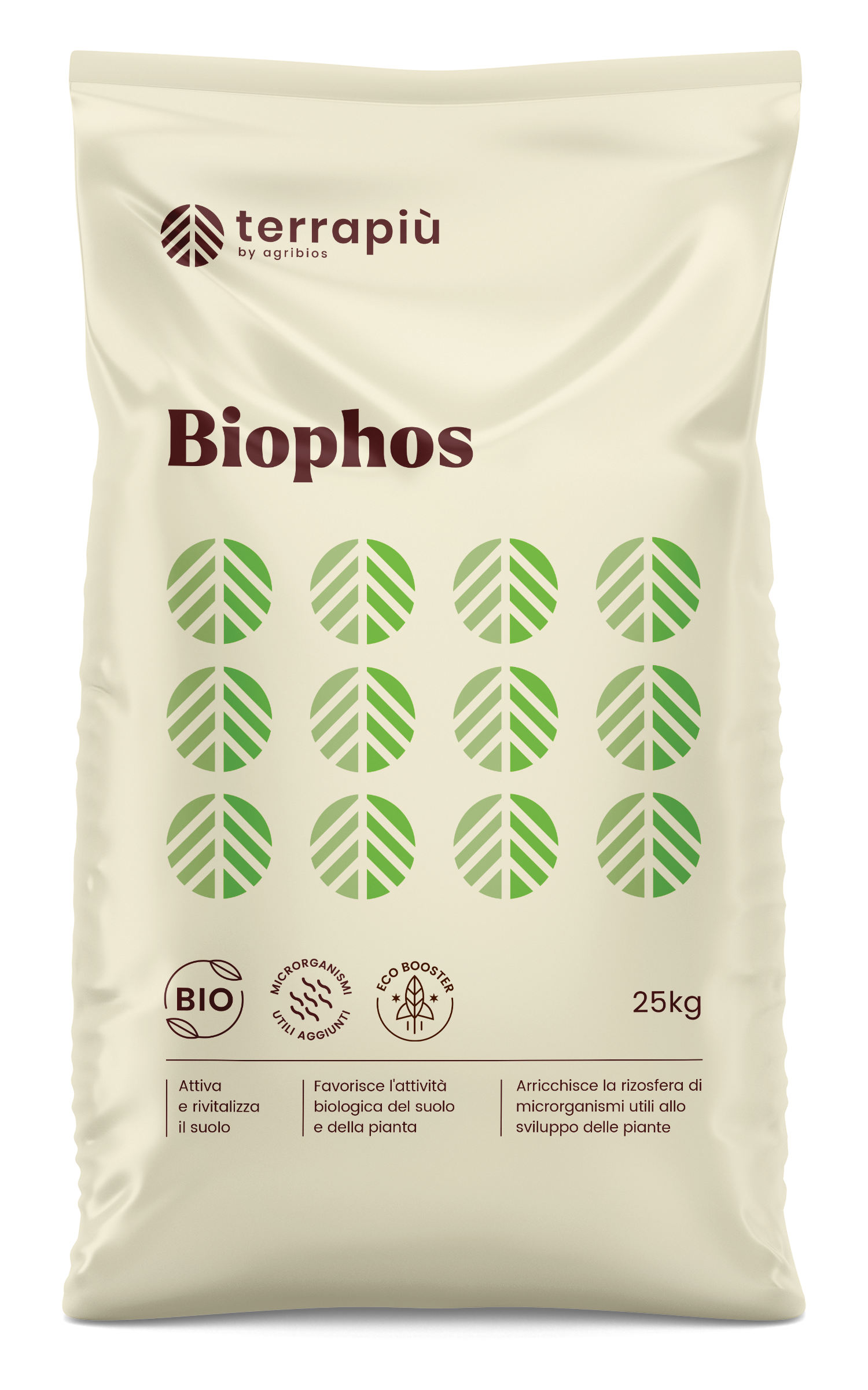
Biophos is a highly innovative multipurpose organic fertilizer, allowed in organic farming. In addition to providing humidified organic matter of high agronomic quality with soil regenerating action, it contains a specific pool of rhizosphere bacteria that, through enzymes such as alkaline phosphatase and phytases, act on the insoluble forms of phosphorus present in the soil, making the element available again for crops.


Prodotti correlati

Agri Bio Aktiv
Agri Bio Aktiv

Fertilizers with microorganisms

Agricomplex
Agricomplex

Organo-mineral fertilizers

Biocomplex
Biocomplex

Organo-mineral fertilizers

Biophos
Biophos

Fertilizers with microorganisms

Subscribe to the newsletter

Subscribe now
immagine icona della newsletter
Agribios Italiana s.r.l.
Yara