We have already addressed this topic in another article, where we highlighted how cultivated soils worldwide are becoming depleted of phosphorus, despite high chemical fertilizer inputs. This is mainly due to erosion and retrogradation into insoluble forms, making it unavailable to crops.
The optimal soil pH for phosphorus availability is generally between 6.0 and 7.0. Outside this range, in acidic soils (leading to iron or aluminum salts) or alkaline soils (calcium salts), phosphorus can become fixed in insoluble compounds.
This evidence, combined with the progressive depletion of mineral phosphorus sources worldwide, calls for a paradigm shift in phosphorus fertilization.
How?
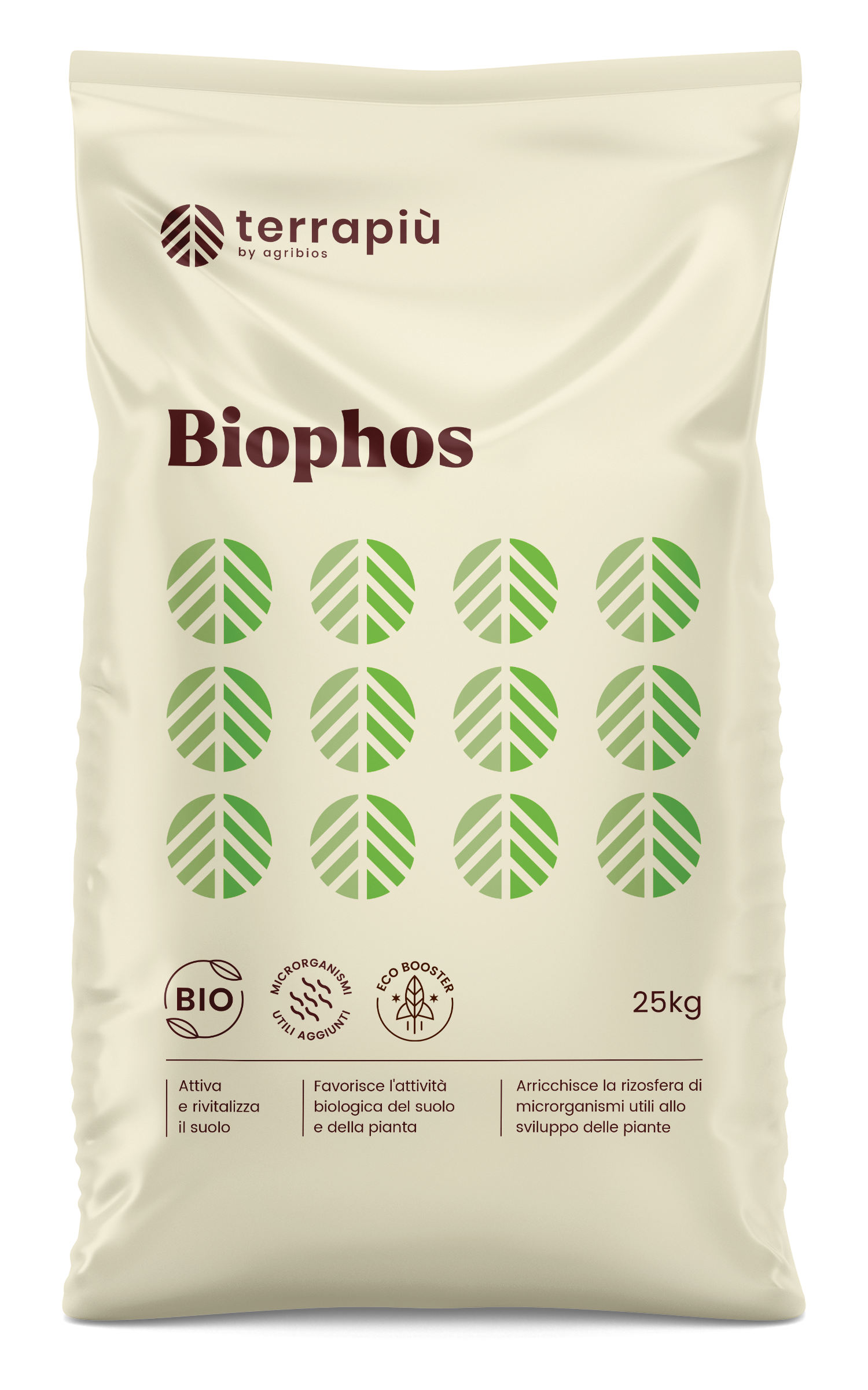
On one hand, by applying phosphorus through organic or organo-mineral fertilizers, which release the nutrient slowly and gradually over time, reducing losses due to insolubilization.
On the other hand, by promoting the mobilization of phosphorus reserves already present in soils: in this case, a major contribution comes from beneficial rhizosphere microorganisms. Their presence in soils can be stimulated by fertilization with humified organic matter, but also by using inoculated fertilizers, which act directly on the microbiota.