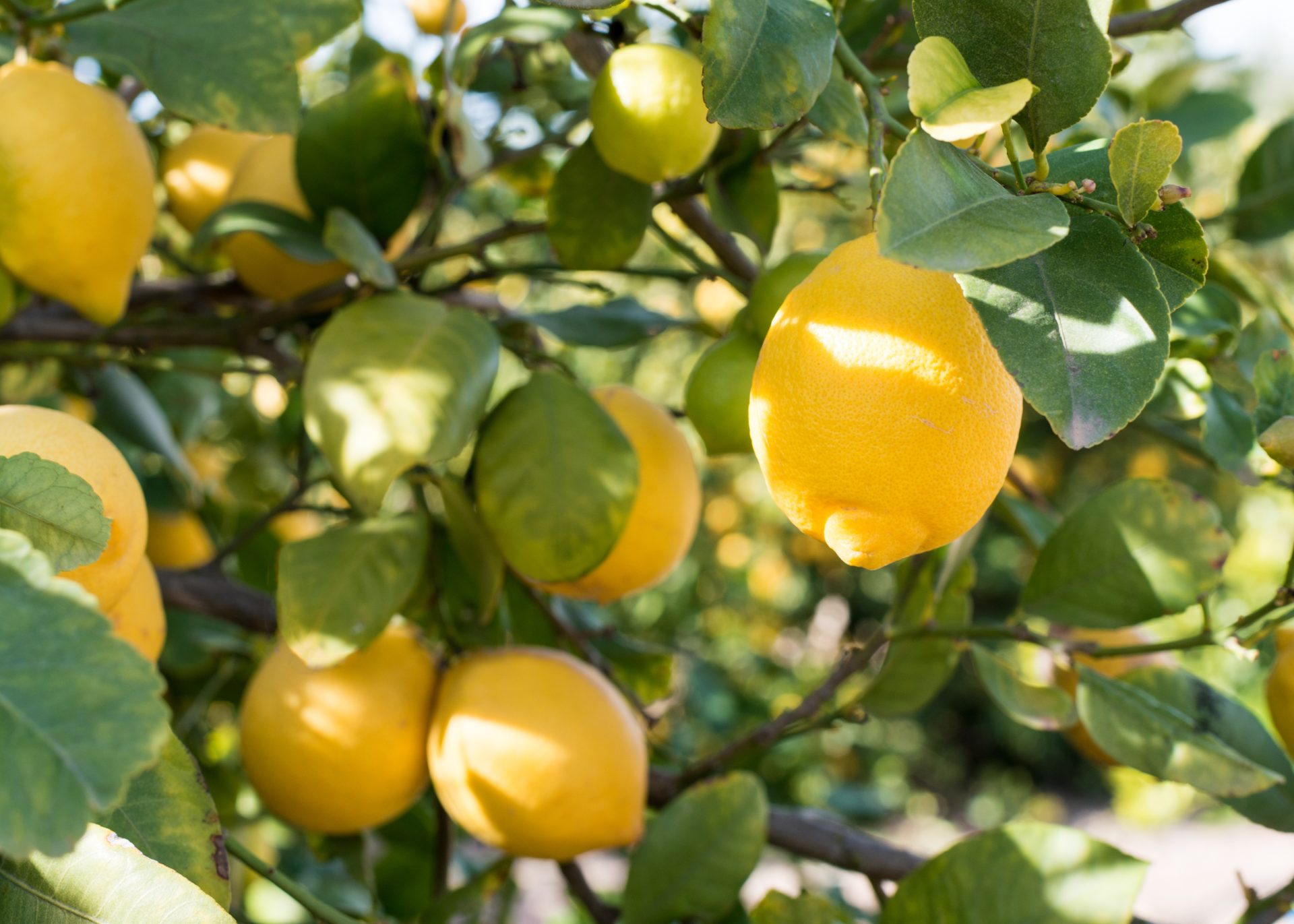
Despite the downward trend of areas planted with citrus in Italy over the last decade, our citrus production remains one of the most important in Europe, ranking behind Spain and ahead of Greece and Portugal in terms of surface area and production volumes. At a global level, China and Brazil top the list of major citrus producers.
The numbers of Italian citrus growing
Italian citrus growing is experiencing a phase of profound restructuring and modernization, especially in Sicily. The island holds the record for hectares planted with sweet orange, the most cultivated citrus fruit in our country: in 2024, out of a national total of 82,500 hectares, 53,000 were located in this region. Here, “small orchards, mostly managed by non-professional growers, are giving way to new plantations using modern varieties or clones. These are genetically homogeneous and phytosanitarily intact plant materials, grafted onto rootstocks resistant to tristeza virus, which rapidly spread in this area in the late 20th century. As is well known, this is the only effective solution for orchards affected by this disease” (Source: Ismea).
In the ranking of Italian regions with the largest areas of sweet orange, Sicily is followed by Calabria with just under 18,000 hectares and Puglia with about 5,000 hectares.
Other citrus fruits grown on significant areas, each around 25,000 hectares, include lemon, mandarin, and clementine. On much smaller areas, bergamot, citron, and grapefruit are cultivated. The production of these “minor” citrus fruits involves other regions: particularly Campania for lemons and Basilicata, which, albeit with limited areas, is developing high-quality citrus cultivation in the Metapontino area.
In general, Italian citrus production is distinguished by the pursuit of quality and excellence, as demonstrated by the numerous DOP and IGP certifications.
Organic citrus growing in Italy
According to the report “Bio in cifre 2024“ by Sinab, in 2023 the total area (in conversion + certified) dedicated to organic citrus growing in Italy amounted to about 33,000 hectares, a figure slightly down compared to 2022 but confirming substantial stability, supported by strong market demand. Sicily, in particular, has significantly increased its certified organic areas, supported by specific regional programs
Nutritional requirements of citrus
As with all agricultural crops, especially perennials, citrus requires balanced supplies of macro and microelements.
Nitrogen is the most important element for vegetative development. Deficiency appears as chlorosis on older leaves, reduced vegetative growth, and decreased production. Conversely, excess nitrogen can cause delayed ripening, greater susceptibility to fungal diseases, and poorer fruit coloration.
Phosphorus is essential for root formation, flowering, and fruit set. The requirement is relatively low, but its deficiency can cause delays in development, reduced flowering, and small fruits.
Potassium is fundamental for fruit quality, affecting size, sugar content, and disease resistance. The requirement is high, and its deficiency appears as necrotic leaf margins, small fruits, and thin peel. Adequate potassium also improves resistance to cold and fungal diseases.
Among the meso and microelements, iron (deficiency causes iron chlorosis), zinc (deficiency causes the phenomenon known as “little leaf” or “rosetting,” characterized by short internodes, small and deformed leaves, and reduced production), and above all calcium are fundamental. Calcium deficiency causes the phenomenon known as “blossom end rot”, with dark and necrotic spots at the fruit apex. To counter this disorder, it is necessary not only to check soil calcium content and fertilize if necessary but also to ensure adequate water availability, without which translocation of calcium from soil to plant may be insufficient.
Nutritional imbalances predispose citrus to other physiopathies and diseases. Excess nitrogen or potassium deficiencies, for example, increase susceptibility to mal secco (Plenodomus tracheiphilus) and other vascular diseases. More generally, inadequate nutritional management can favor alternate bearing, fruit drop, and anomalies in fruit coloration and storability.
When to fertilize citrus?
Citrus are nutritionally demanding crops, characterized by a prolonged production cycle requiring a balanced supply of elements throughout the year. They are evergreen plants, most of which flower between March and April, with harvest from November to January.
The post-harvest vegetative rest period (cold months) is the ideal time for basal fertilization with slow-release organic fertilizers.
At vegetative awakening (February–March), nitrogen requirements start to increase to support the synthesis of new tissues, while phosphorus becomes crucial for root development and preparation for flowering. In this phase, it is essential to provide a balanced supply of macro and microelements, preferring formulations that combine immediate effect with gradual release. Deficiency during this critical period can compromise the entire production season.
During flowering and fruit set (April–May), phosphorus is the key element. Nitrogen must be available but not excessive, to avoid favoring vegetative growth at the expense of flowering. Potassium begins to be important for flower quality and resistance to environmental stresses. Microelements, particularly boron and zinc, are fundamental for pollen fertility and fruit set.
In summer (June–August), fruits enter the rapid growth phase. Nutritional demands reach their peak, with high requirements for nitrogen for protein synthesis, potassium for sugar accumulation and fruit enlargement, and calcium for peel development. This is the period of greatest water and nutritional stress for the plants.
During ripening (September–November), nitrogen excesses should be avoided to prevent delays and poor coloration. Potassium remains essential for sugar accumulation and final quality, while calcium is crucial for post-harvest shelf life.
The importance of organic matter in citrus growing
Organic matter plays a fundamental role in citrus growing. As in other crops, it serves as a major slow-release nutrient reservoir, positively influencing chemical fertility and promoting an optimal balance of the soil microbiota, thus supporting biological fertility.
Moreover, organic matter has a positive effect on the physical properties of soil, such as water retention capacity. This is crucial in citrus growing, mainly concentrated in southern regions, where high temperatures favor organic matter mineralization and where severe droughts during fruit ripening are increasingly frequent.
Additionally, much of Italian citrus is cultivated on sloping soils, where adequate organic matter content helps reduce surface erosion and runoff.
Citrus cultivation therefore benefits from the use of organic and organo-mineral fertilizers.
Agribios tips
The Ortofrutta Special 12.7.5 organo-mineral fertilizer provides in a single application the mineral fraction containing gradual-release nitrogen, phosphorus, and potassium, together with a significant amount of highly humified organic matrix (manure), and meso-elements. The nutrients are protected thanks to the chelating action of humic acids contained in organic matter, improving fertilization efficiency and positively influencing soil structure.
The Agriorganico 872 organic fertilizer derives from a thorough and homogeneous mixing of humified manure with meat meal. The raw materials are mixed and cold pelleted. It is therefore an ideal fertilizer for basal fertilizations of all crops. Humified manure, rich in humic and fulvic acids, promotes optimal soil microbiological activity, better use of nutrients already present in the soil — including phosphorus, thanks to the formation of phospho-humates — and improves soil structure. Hydrolyzed meat meal provides amino acids, hormones, enzymes, and vitamins. Agriorganico 872 is approved for use in organic farming.
Agri Bio Aktiv is an organic fertilizer inoculated with beneficial microorganisms, acting as a soil regenerator. In addition to supplying organic matter and nutrients, it promotes and directs the proliferation in the soil of microorganisms beneficial to plant development. Its special microbial composition, rich in Trichoderma, acts on the soil and roots by limiting, through antagonism, the development of pathogenic agents responsible for certain root system diseases.
Prodotti correlati

Agri Bio Aktiv
Fertilizers with microorganisms

Ortofrutta Special
Organo-mineral fertilizers

Agriorganico
Organic fertilizers

Subscribe to the newsletter
Subscribe now
