Crop focus •
18 December 2025

Fertilisation of grain legumes: Phosphorus takes centre stage

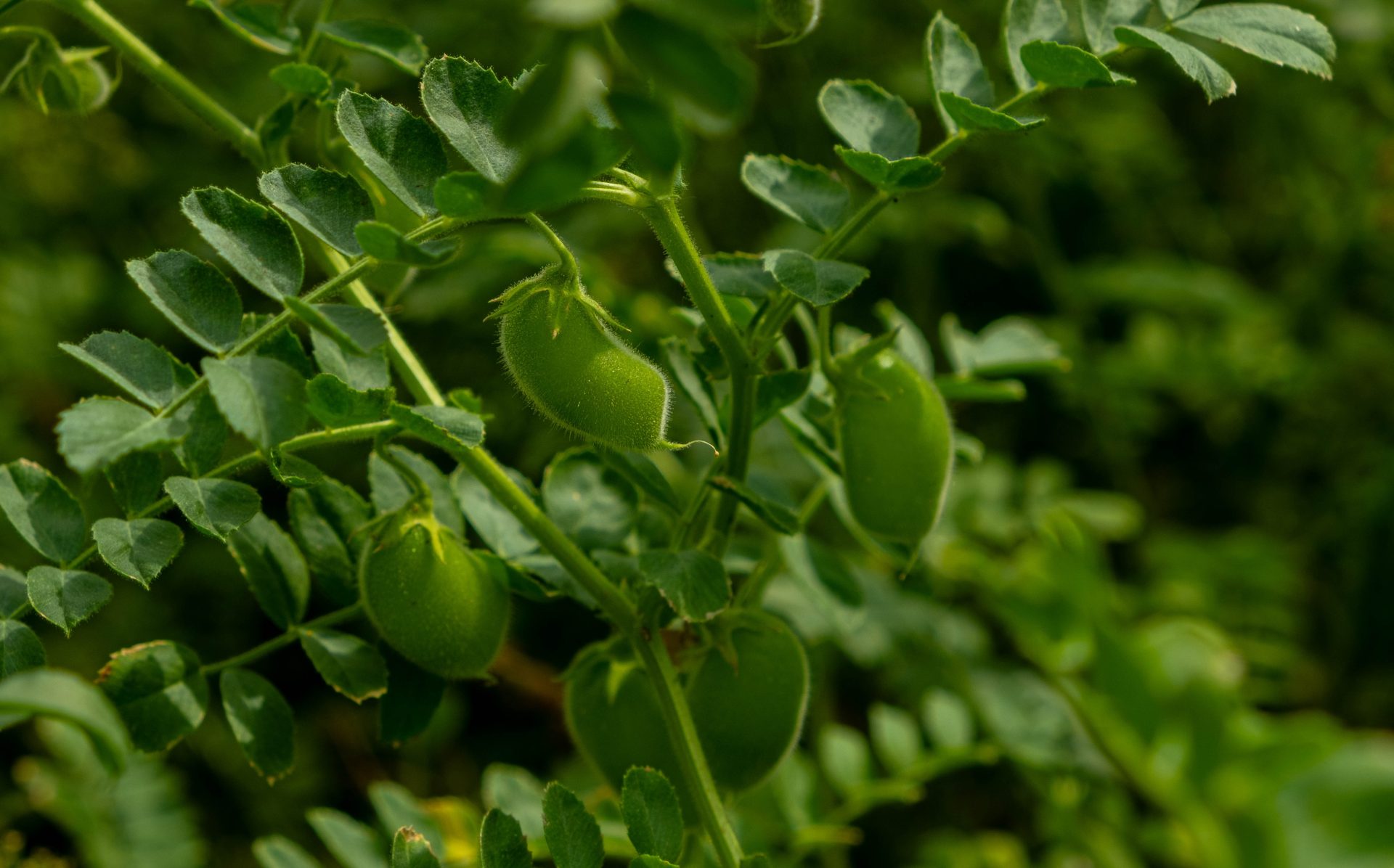
Their importance within cropping systems is demonstrated by the fact that they are referred to as “soil-improving crops”. Today, in Italy, they cover several hundred thousand hectares: grain legumes have a significant agronomic value – in addition to their economic relevance – and to cultivate them profitably it is essential to optimise, among other factors, fertilisation management.

In the specific case of legumes, this agronomic practice must take into account their distinctive characteristic, namely their ability to fix atmospheric nitrogen, which drastically reduces the need for Nitrogen inputs. However, this does not mean that legumes are completely self-sufficient from a nutritional standpoint. In particular, when fertilising legumes, close attention must be paid to their Phosphorus requirements.

Grain legumes in Italy

In Italy, the cultivation of grain legumes is essentially characterised by a strong polarisation between soybean on the one hand and other species on the other, namely common bean, faba bean, pea, chickpea, lupin, lentil and grass pea, with the first four covering the largest cultivated areas. These areas are nonetheless much smaller for faba bean (approximately 60,000 hectares), common bean and green bean (around 17,000 hectares), pea (about 15,000 hectares including both protein pea and dry pea) and chickpea (around 15,000 hectares) compared to soybean, which in 2024 covered approximately 300,000 hectares in Italy.

Their geographical distribution is also polarised, with soybean mainly cultivated in Northern Italy (Lombardy, Piedmont, Veneto, Emilia-Romagna and Friuli-Venezia Giulia), while the other legumes are mostly grown in Central and Southern Italy (Tuscany, Marche, Umbria, Lazio, Apulia, Sardinia and Sicily). Their end use also differs: soybean is used for about 90% in livestock farming, whereas crops such as pea, bean, chickpea and faba bean are mainly intended for human consumption.

Growing grain legumes under organic farming

According to the Bio in cifre 2024 report by SINAB, the total area dedicated to protein crops and grain legumes under organic management in 2023 amounted to approximately 44,000 hectares (including both land under conversion and fully converted land), showing an increase compared to previous years.

These productions respond to two growing market trends: increasing demand for healthy foods and for foods with a high protein content.

Legumes and nitrogen fixation

The ability of legumes to fix atmospheric nitrogen, making it available for crop uptake, gives them a key role in crop rotations. Legumes are able to establish a mutualistic symbiosis with bacteria of the genus Rhizobium – located in specialised structures known as root nodules – which, through the enzyme nitrogenase, convert atmospheric nitrogen into ammonia.

The efficiency of nitrogen fixation depends on several factors: soil pH (optimal between 6.0 and 7.5), sufficient availability of micronutrients, adequate temperature and water supply. Ensuring the presence of specific Rhizobium strains is essential. Seed inoculation with selected bacteria can significantly increase the efficiency of the process, especially in soils where legumes have never been cultivated. A crucial aspect is that nitrogen fixation is reduced in the presence of high concentrations of mineral nitrogen in the soil, a phenomenon known as “nitrate inhibition”.

The role of legumes in crop rotations

The fixation of atmospheric Nitrogen by rhizobia in symbiosis with legumes increases soil chemical fertility: after harvesting legumes, significant amounts of organic Nitrogen derived from crop residues, root nodules and exudates remain in the soil.

These exudates are rich in amino acids, sugars and organic compounds that stimulate microbial activity in the rhizosphere.

Legumes typically develop a deep taproot system, which often explores soil layers that are normally inaccessible to crops with fibrous root systems. This characteristic promotes vertical drainage, improves soil porosity and facilitates root penetration by subsequent crops. The decomposition of roots and nodules also contributes to increasing organic matter content in deeper soil layers, with positive effects on soil structure and water-holding capacity.

In crop rotations, legumes are generally followed by crops with high Nitrogen requirements, such as cereals, leafy vegetables or industrial crops. This approach maximises the use of residual Nitrogen and reduces the need for nitrogen fertilisers.

Which nutrients do grain legumes require?

The ability of legumes to biologically fix nitrogen clearly influences fertilisation strategies.

Legumes with good symbiotic activity can meet between 60% and 90% of their Nitrogen requirements. However, during the early growth stages, before the symbiosis is fully established, a starter Nitrogen application may be necessary, taking care not to exceed rates in order to avoid nitrate inhibition.

A critical nutrient for legumes is Phosphorus, which is essential for the development and functioning of root nodules, as well as for vegetative growth and seed filling. It should be noted that Phosphorus is often present in large quantities in Italian cultivated soils, but is not available for plant uptake, as it is immobilised in the form of dicalcium and tricalcium phosphates.

Potassium, which is fundamental for osmotic regulation, enzyme activation and sugar transport, is required by legumes in significant amounts, particularly during the seed filling phase, when the greatest accumulation of proteins and starch occurs.

Among micronutrients, those essential for the proper functioning of the enzymatic system involved in nitrogen fixation are Molybdenum, Iron, Cobalt and Nickel. Molybdenum, in particular, is often the limiting micronutrient in acidic soils.

When and how to fertilise grain legumes

Phosphorus and Potassium should preferably be applied pre-sowing and incorporated into the soil through ploughing or shallow tillage. The use of organic or organo-mineral fertilisers is particularly effective at this stage, as it ensures a prolonged nutrient release over time, avoids excessive Nitrogen applications and, when high-quality and highly humified organic matrices are supplied, promotes microbial activity in the rhizosphere. This includes not only Rhizobium bacteria, but also those fractions of the microbiota capable of solubilising immobilised Phosphorus, which can then be transported to crop roots by humic and fulvic acids. Moreover, the addition of organic matter improves soil physical properties and water-holding capacity, creating a favourable environment for the development and activity of symbiotic bacteria.

Localised application of Phosphorus and micronutrients at sowing can promote early root development and nodule formation. Top-dressing fertilisation is rarely required for legumes and may only be useful in cases of evident Potassium or micronutrient deficiencies during the growing cycle.

Agribios tips

Agriorto 6.14.14 is an organo-mineral fertiliser whose organic matrix consists of a blend of highly humified, top-quality manures. Its low Nitrogen content, higher levels of Phosphorus and Potassium, and the presence of micronutrients make this fertiliser particularly suitable for the nutrition of grain legumes.

Biokalium 338 is an organic soil-activating fertiliser based on humified organic matter, vegetable protein meals and organic vinasse. This product, with exceptional characteristics, not only supplies humified organic matter and nutrients, but also promotes the proliferation of beneficial microorganisms in the soil that support plant development. The use of Biokalium 338 is permitted in organic farming.

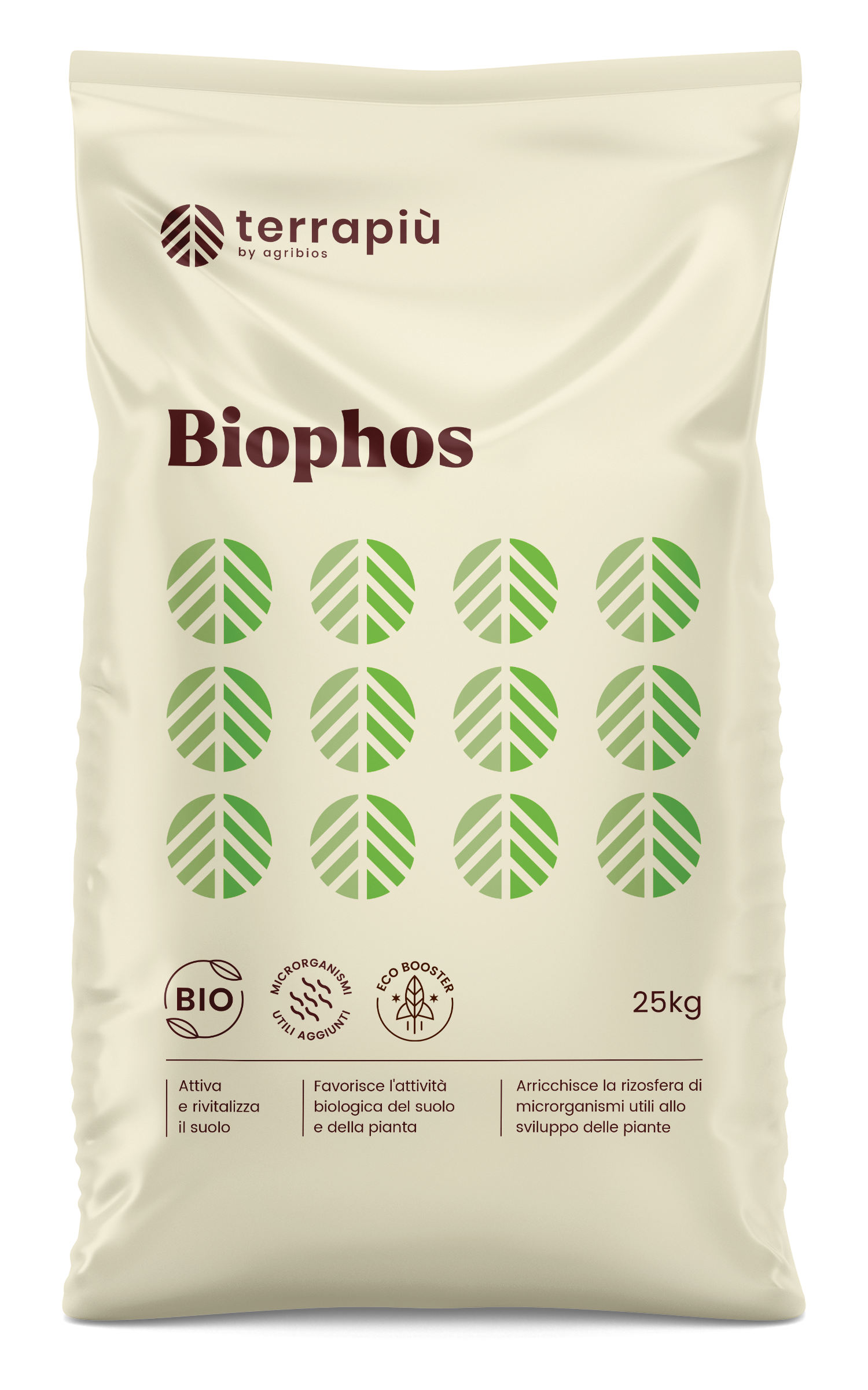
Biophos is an organic fertiliser permitted in organic farming and highly innovative, combining multiple functions within a single product. In addition to supplying high-quality humified organic matter with a soil-regenerating effect, it provides a specific pool of rhizosphere bacteria which, through their activity in the soil, act on existing Phosphorus, making it available again for crops. Some of these bacteria, as part of their natural metabolism, produce alkaline phosphatase and phytase enzymes, which solubilise mineral phosphates and make them available for plant uptake.


Prodotti correlati

Agriorto
Agriorto

Organo-mineral fertilizers

Biokalium 338
Biokalium 338

Organic fertilizers

Biophos
Biophos

Fertilizers with microorganisms

Subscribe to the newsletter

Subscribe now
immagine icona della newsletter
Agribios Italiana s.r.l.
Yara