Crop focus •
26 August 2024

The beneficial effect of useful microorganisms on short-cycle crops

The beneficial role that some soil microorganisms can play in agriculture has been known for some time, but it has come back into focus with greater force in recent years, given the growing need to recover the fertility of a large part of cultivated soils, put to the test by intensive agriculture in recent decades.

Today there is widespread awareness of the need to put into practice regenerative agriculture techniques and more generally low-impact agriculture, to promote vitality in soils, which if lacking leads to an increased difficulty in maintaining the quantity and quality of production; unless it’s at the cost of increasing input, the effectiveness of which, however, becomes rather random, while the risk of heavy repercussions on the environment grows.

As important as soil microbiota is for plant health and nutrition, it is especially so in agriculture that must face the effects of climate change, and we have already had the opportunity to dive into another in depth study.

Similarly, we have already dedicated one of our articles to the topic of inoculated fertilizers, which provide useful microorganisms to the soil whilst stimulating its vitality and proliferation thanks to a formula with humidified organic matter. Of course, not all inoculated fertilizers are equally effective: the methods of inoculation and the quality of the organic matrix make a difference.
Trichoderma: protection as well as biostimulation

The fungi belonging to the genus Trichoderma deserve special attention, among those useful soil microorganisms, which we have spoken about extensively in a previous article.

We would like to reiterate that, although the positive role of these microorganisms in agriculture is more frequently associated with the action of protecting plants from diseases and parasites – especially from fungi responsible for diseases of the root system, the collar or more generally of wood – in reality Trichoderma also perform an important phytoregulatory and biostimulating action, which translates into an improved nutritional status of the plant and  greater resistance to numerous environmental critical issues, including cold: a topic of absolute relevance in a year as challenging from a thermal point of view as 2024.

However, for the sake of exhaustive information, it should be emphasized that different species of Trichoderma and, within the individual species, different strains, show different aptitudes and capacity to positively influence plant physiology.

Some mechanisms of action of Trichoderma spp.

Some strains of Trichoderma spp.  increase resistance to specific abiotic stresses, such as water deficit, water and soil salinity and thermal anomalies.

One of the main mechanisms by which resistance to abiotic stress is conferred is the increase in the expression levels of the enzymes involved in the removal of so-called reactive forms of oxygen or ROS. Plants exposed to biotic or abiotic stresses frequently produce high levels of ROS and some of the symptoms of these stresses are due to the resulting toxicity phenomena.  Another important benefit associated with the presence of Trichoderma spp in soil is the induction of greater nitrogen utilization efficiency in plants. The mechanisms by which this efficiency is induced are not fully known, but a probable important factor is the ability of fungi to increase the development of the root system’s depth and therefore the volume of soil explored by the roots.

Finally, the ability of these fungi to increase the photosynthetic efficiency of plants has been confirmed.

Biostimulating short-cycle crops

If the application of substances with a biostimulating action is in itself useful for any crop that faces environmental, physiological or phytopathological problems, it can become strategic on short-cycle crops, such as vegetables.

In these cases, acting promptly to induce the plant to react quickly to a specific problem becomes a crucial fact to safeguard production and consequently income, even in synergy and in support of phytoiatric treatments and nutrition strategy.

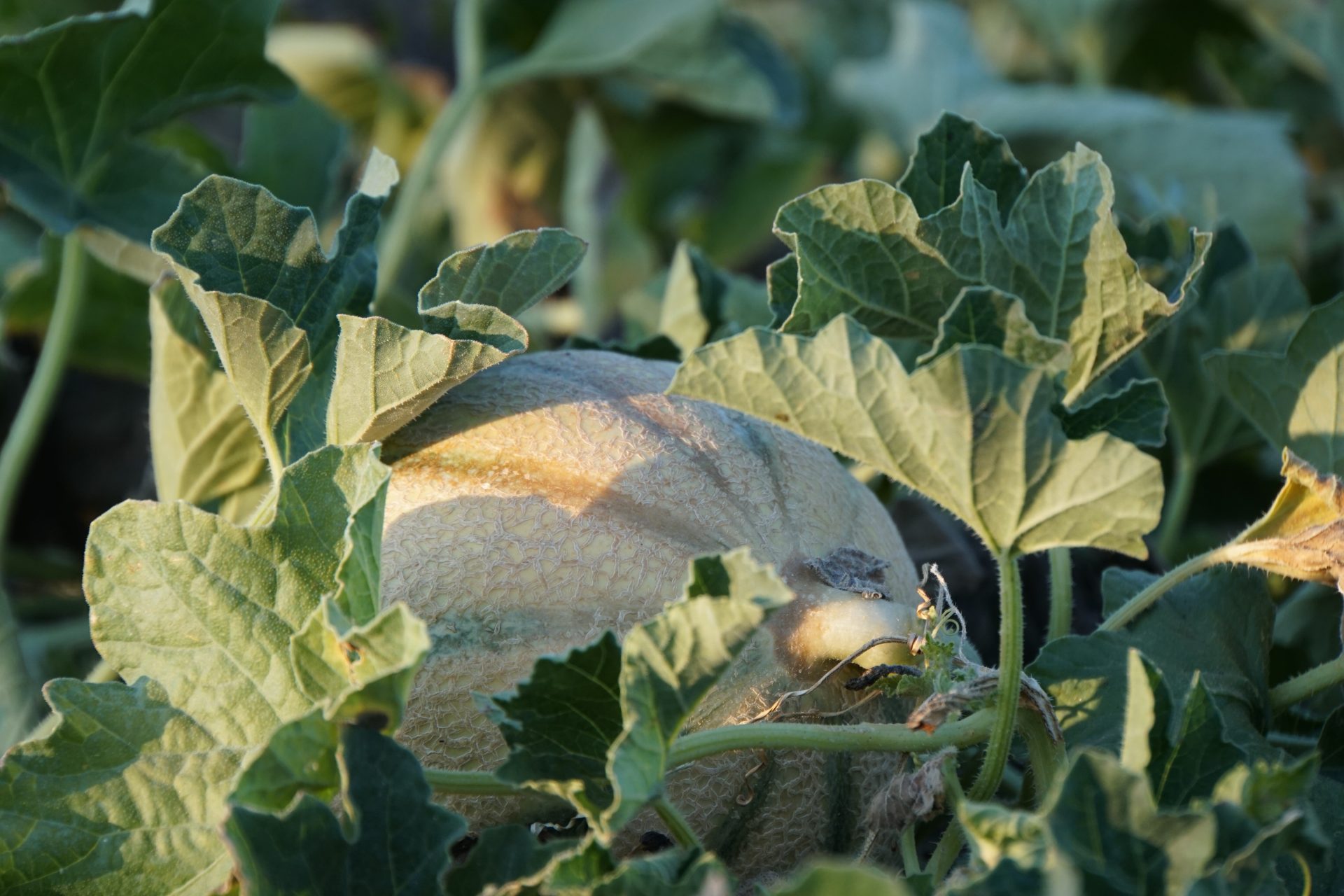
The photos demonstrate the positive effects of applying Agri Bio Aktiv by Agribios Italiana on melons of the Triploid variety in Parete (CE) during the 2024 crop year.

With over 10 years on the market, Agri Bio Aktiv is a product now widely used on different crops and in different cultural contexts, showing a high capacity to activate soils and stimulate crop development. Made with humidified organic matter added to bacterial and fungal inoculates, in addition to providing organic matter and nutrients, it promotes and guides the proliferation of useful microorganisms in the soil. The presence in the inoculum of Trichoderma, as well as bacteria from the rhizosphere, limits the development of pathogens responsible for certain diseases of the root system such as Fusarium, Pythium, Armillaria, Sclerotinia, Phytophtora and Rhizoctonia, thus improving the health of the crop, but at the same time increasing the production per hectare of crops from  income, in addition to improving the visual appearance of ornamental plants and turfs.


Subscribe to the newsletter

Subscribe now
immagine icona della newsletter
Agribios Italiana s.r.l.
Yara