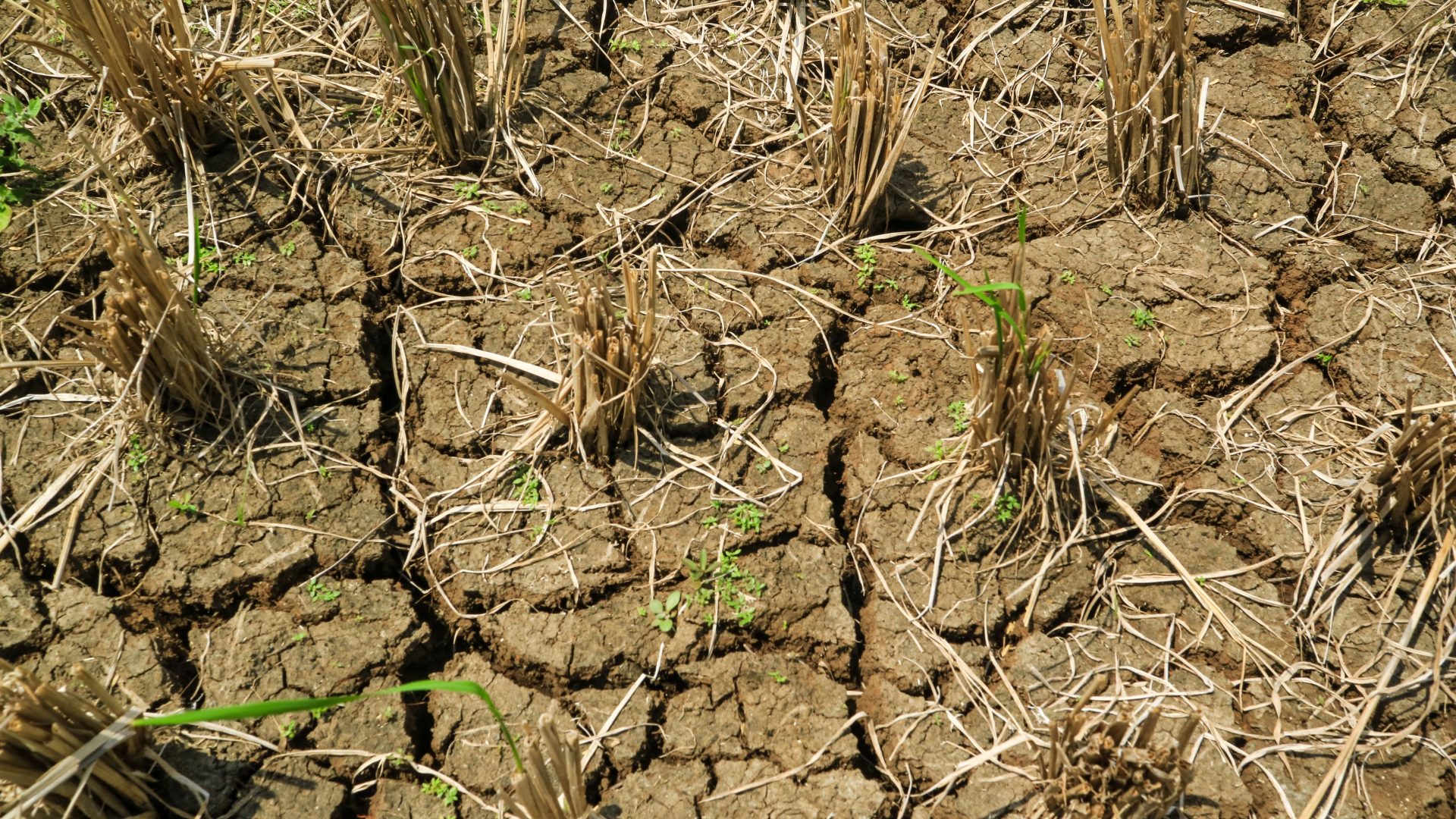
Cultivate life in the soil •
18 December 2025

Soil degradation, a worrying and intensifying phenomenon

Despite the so-called soilless crops, whose roots draw nutrients directly from nutrient solutions or various substrates, being quite widespread today (especially in horticulture and floriculture), soil in agriculture continues to play an irreplaceable role, along with its fertility, which we have extensively discussed in this in-depth article.

The fertility of agricultural soils underpins their quality, a term that refers to their ability to adequately meet crop nutritional needs, a characteristic that derives from a combination of “well-being” conditions that soil must possess to be alive and vital.

However, as is well known, many cultivated soils today are in a state of degradation, more or less severe, due to a series of often interconnected reasons.
As usual, let us delve into the topic step by step.
What is meant by soil degradation?

According to the ISPRA website, the Italian Institute for Environmental Protection and Research, “Soil degradation is a reduction or loss of the biological and economic productive capacity of the resource. Often, the degradation process is indissolubly linked to biodiversity loss and the impacts of climate change.”

Other definitions, such as that provided by Wikipedia, are broader: “Soil degradation is a degenerative and irreversible process, often caused by humans or their activities, resulting in its total disappearance or a loss of fertility from a physical-mechanical, chemical, and biological standpoint. Due to the long times required for pedogenesis, soil degradation is fully part of the broader phenomenon of environmental degradation.”

In other cases, reference is made more generally to the loss of soil’s ability to provide ecosystem services such as food supply, water filtration, carbon sequestration, and biodiversity support.

Soil degradation, therefore, is not only an agricultural problem but also a broader issue for human quality of life. However, agriculture is closely connected to the phenomenon, both as a partial cause and as a sector that strongly suffers its consequences.

Causes and consequences of cultivated soil degradation

Focusing on cultivated soil degradation, we can identify its main causes, partly “endogenous” and partly more general:

  1. Intensive farming practices, aimed at achieving maximum yields per unit area, which over time—despite heavy external inputs to the plant-soil-environment system—lead to reduced soil productive potential and its “fatigue.”
  2. Use of irrigation water of suboptimal quality, which can cause imbalances in the circulating solution, phytotoxicity, nutrient deficiencies due to antagonisms among elements, and salinization.
  3. Intense mechanization and repeated passes with heavy machinery, often on soil not in proper condition, resulting in structural breakdown.
  4. Use of fertilizers or amendments with composition unsuitable for the receiving soil or of poor quality (e.g., containing organic matrices not fully stabilized or derived from waste incompatible with soil improvement, as sometimes occurs with compost).
  5. Monoculture and/or continuous cropping, which subject soil to qualitatively and quantitatively similar nutrient removal over prolonged periods, leading to severe soil impoverishment, not always remediable with external inputs, and to the selection of pathogens and pests linked to specific crops, which—due to biodiversity loss—are not counteracted by beneficial microorganisms.
  6. Various forms of pollution, both atmospheric and soil-related, introducing harmful substances for crops and necessitating remediation processes.
  7. Climate change, which—by altering environmental parameters such as temperature, precipitation, wind, and radiation intensity—disrupts nutrient cycles and balances among different forms of soil organic matter (typically accelerating mineralization), including the living fraction, as it influences microbiota composition.
    The combined effect of organic matter loss and intensified atmospheric phenomena leads to greater loss of surface soil layers (typically more fertile) through runoff and erosion.
    If degradation is compounded by land sealing or more generally by soil removal from agricultural use, destined for urbanization or other productive activities, the resulting picture is alarming.

Productivity losses linked to soil degradation

Soil degradation has a direct and measurable impact on agricultural productivity, with significant economic and environmental consequences.

The FAO emphasizes that soil erosion could cause a 10% loss of agricultural crops by 2050, and that about 7% of Italian agricultural areas are at risk of salinization, with significant impacts on fertility and crop sustainability.

According to Re Soil Foundation, 28% of Italy’s arable land has been lost over the past 25 years due to desertification, erosion, and rural abandonment.

ISPRA reports that land consumption caused an average annual loss of over 400,000 tons of agricultural products between 2012 and 2021.

Extreme soil degradation is called desertification

The extreme manifestation of soil degradation is desertification, defined by the Ministry of Environment and Energy Security, echoing the UN, as “the degradation of arid, semi-arid, and dry sub-humid lands attributable to various causes, including climatic variations and human activities,” and “manifested by the reduction or disappearance of biological or economic productivity and complexity of cultivated lands, whether irrigated or not, grasslands, pastures, forests, or wooded areas caused by land-use systems or one or more processes, including those resulting from human activity and settlement patterns, such as water and wind erosion; deterioration of physical, chemical, and biological or economic soil properties; and prolonged loss of natural vegetation (United Nations Convention to Combat Desertification – UNCCD Art. 1.f).”

Organic matter and regenerative agriculture against soil degradation

The list of causes above highlights the crucial role of organic matter in preventing and mitigating this phenomenon. Organic matter positively influences soil physical and chemical properties and supports biodiversity, including microbiota.

Given the widespread shortage of organic matter in cultivated soils nationally and globally (in Italy, average levels range between 1% and 2%), it is essential to:

  • adopt agricultural practices that not only prevent further depletion of soil organic matter but also restore it, such as those typical of regenerative agriculture;
  • use organic fertilizers and organo-mineral fertilizers, ensuring the selection of products made from high-quality organic matrices.

Soil degradation and wildfires

A less emphasized aspect of soil degradation is its link to wildfire intensification. Soils rich in organic matter also have greater water retention capacity.

Consequently, vegetation (or crops) growing on such soils will be in an optimal water state, whereas where organic matter is lacking and soil is degraded, both soil and vegetation are drier: in such conditions, the likelihood of wildfire occurrence and its spread rate are much higher.

Wildfires themselves, which have greatly intensified in recent years in our country, are in turn one of the causes of soil degradation.


Subscribe to the newsletter

Subscribe now
immagine icona della newsletter
Agribios Italiana s.r.l.
Yara