If our crops show symptoms attributable to iron deficiency, it is advisable to ascertain their origin and, if necessary, carry out a ‘differential diagnosis’. Some plant diseases and These disorders can in fact cause symptoms similar to those of iron deficiency.
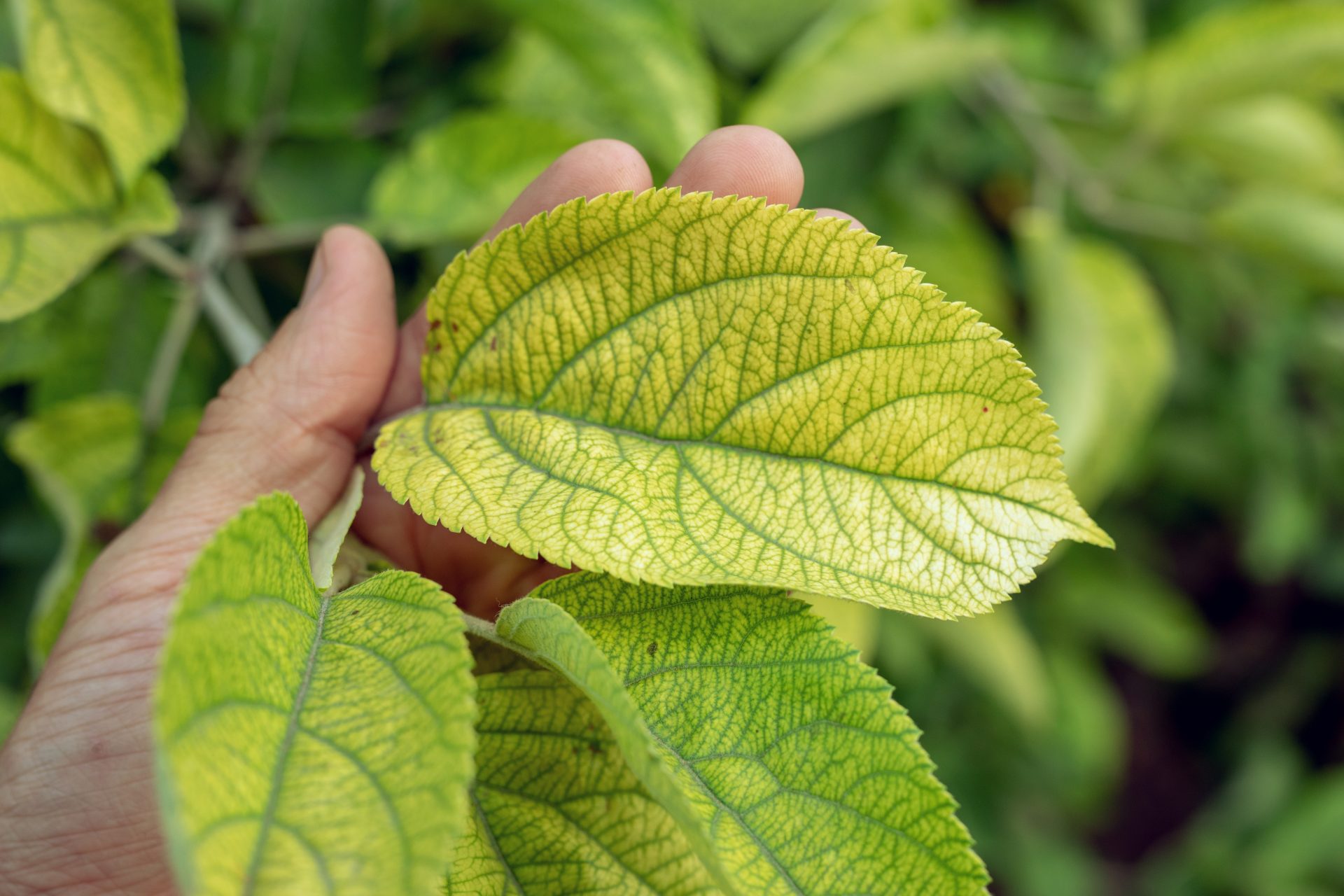
Nitrogen or Magnesium deficiencies, for example, cause leaf yellowing similar to those caused by iron chlorosis but distinguishable from the latter because they mainly affect old leaves, while Iron deficiency occurs on young and newly formed leaves, since Iron is not as mobile in the plant. In the most severe cases, these leaves take on a white color, with a necrotic border.
Similarly, some viral yellowing could be confused with iron chlorosis, but while the former affects the entire leaf strip, iron deficiency spares the veins, which normally remain green or in any case take longer than the leaf strips to discolour. And compared to the plot, yellowing of a biotic nature is normally widespread everywhere, while in the case of iron deficiency, it is often only plants from areas above the ground with predisposing characteristics that show symptoms.
In case of doubt, to establish the most appropriate interventions and avoid unnecessary or even harmful fertilization (the administration of excess chelates can cause phytotoxicity phenomena), both soil analysis and analysis of the composition of the leaf blades can help.
The Lindsay and Norwell method quantifies the microelements that can be assimilated by the soil, including iron. The method is based on the ability of DTPA (diethylenetriaminopentacetic acid) to make these microelements soluble and assimilable. Assimilable iron in soil is considered to be poor if between 0 and 4 ppm, average between 4 and 8 ppm, and high above 8 ppm.
As for the iron content in leaves, although it varies greatly in different crops, levels lower than 50 ppm are indicative of a deficiency (with the exception of cereals, whose leaf blades are normally lower levels).