Fertilizers, Circular Economy and Green Deal

The data from the 2024 Report of the Circular Economy Network on circular economy trends in Italy and Europe place our country in the group of “those that matter”: in Italy, the recycling of waste and by-products to obtain secondary raw materials and the consequent reduction in the volumes of waste that reach landfills is a consolidated and growing reality, albeit with large margins for improvement.

What does the circular economy have to do with the issues dear to us, namely those that have to do with fertilization?
What the circular economy is

As stated on the European Parliament website, “The circular economy is a model of production and consumption that involves sharing, lending, reusing, repairing, reconditioning and recycling existing materials and products for as long as possible.

In this way, the life cycle of products is extended, helping to reduce waste to a minimum. Once the product has finished its function, the materials it is made of are, in fact, reintroduced, where possible, through recycling. In this way, they can be continuously reused within the production cycle, generating further value”.

The circular economy is one of the cornerstones of the Green Deal, the European Union’s great green transition project that is based on a series of strategies aimed at making Europe the first climate-neutral continent by 2050. Within the Green Deal, as is well-known, agriculture plays a leading role. The primary sector is asked to make an enormous effort towards reducing both the environmental impact and the exploitation of the resources used.

How Agribios contributes to the circular economy

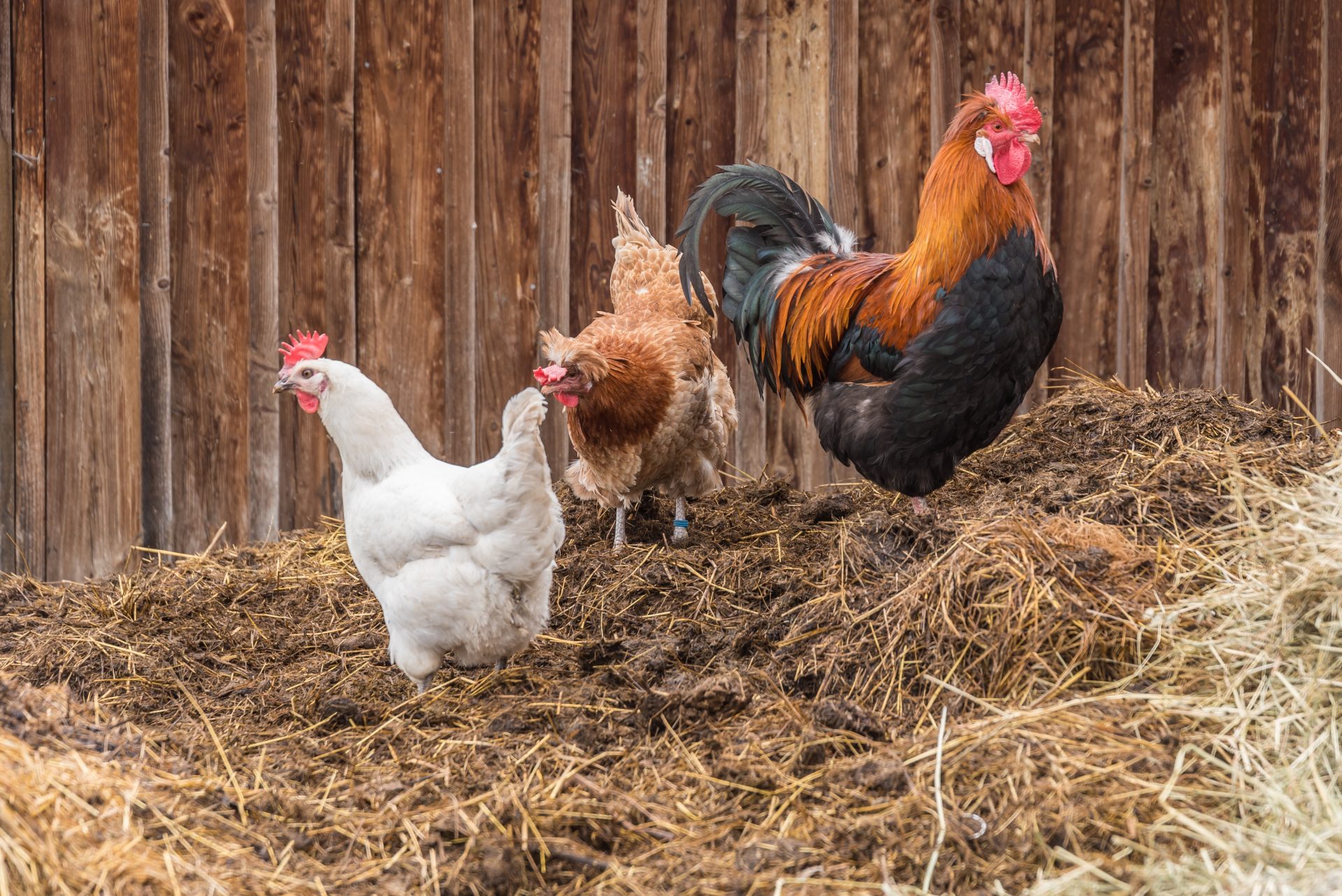
The organic matrices with which soil improvers and fertilizers are produced at Agribios are, in the vast majority of cases, by-products of agriculture or the agro-industry: they come from the animal world (manure, bone and meat meal, hoof and horn meal ) or from the plant world (vinasse, pomace pulp).

These are by-products that, not being reusable, must still be subjected to complex treatments to reduce their microbial load and reduce the potential negative impact on the environment linked to the emission of greenhouse gases (methane in particular) and the eutrophication of rivers, lakes and seas.

Recovering these waste materials and giving them a new value as secondary raw materials means not only reducing the exploitation of resources but also removing them from disposal, which is always rather expensive and involves an environmental impact.

Organic matrices for fertilizers and soil improvers

However, as we have already emphasized several times, for example, in this episode of our  podcast “Fertile soil”, that not all organic matrices are of equal value.

At Agribios Italiana, we produce organic and organo-mineral fertilizers as well as soil improvers.

Several organic matrices form the basis of the preparation of our products, and for us,  selecting the best among them is fundamental: we make this a cornerstone of the quality of our products.

It is precisely by virtue of this rigorous search for quality organic matrices that we exclude some that are normally used in the production of fertilizers, such as compost and sludge of different origins, which we do not consider consistent with our concept of quality.

Our crops need to be well-nourished, but our countryside must not become a dumping ground for organic waste.


Subscribe to the newsletter

Subscribe now
immagine icona della newsletter
Agribios Italiana s.r.l.
Yara