Reading fertilizer labels for an informed choice

When we purchase food and beverages, we consult the label to understand what we will be consuming. When we buy clothing, we read the label to verify its geographical origin and fabric composition. But when we purchase fertilizers, do we read their label carefully? We certainly should, and we should both know which information we are legally required to find on it and be able to correctly interpret the indications provided.

Below are some insights on this topic, with particular reference to fertilizers containing organic matter.

Fertilizers, soil improvers, fertilizers: legal definitions

In Italy, the legal definitions of fertilizers, fertilizers, soil improvers and correctives are mainly regulated by Legislative Decree No. 75 of 29 April 2010 (as subsequently amended), which reorganised and revised legislation on fertilizers, often referring to the previous Law No. 748 of 19 October 1984.

Fertilizers: mineral, organic or organo-mineral products capable of supplying nutrients to plants (fertilizers) or improving soil properties (soil improvers/correctives).

Fertilizers: products whose main function is to supply nutrients to plants (Nitrogen, Phosphorus, Potassium, micronutrients). They are divided into:

  • mineral fertilizers, of inorganic origin, single (one nutrient) or compound (NP, NK, PK, NPK);
  • organic fertilizers: derived from materials of biological origin, containing carbon bound to nutrients;
  • organo-mineral fertilizers: mixtures of mineral and organic fertilizers.

Soil improvers: natural or synthetic substances, mineral or organic, capable of modifying and improving the chemical, physical and biological properties of a soil.

Correctives: substances capable of modifying the chemical characteristics of the soil, in particular pH (correction of acidity or alkalinity).
What to look for on the label of an organic soil improver

In the case of organic soil improvers, the most important information to look for on the label is the matrix from which they are produced.

The most “noble” matrices are represented by manures: cattle, sheep, horse, poultry and rabbit manure. However, there are also organic soil improvers produced from different matrices, such as simple vegetal soil improver, mixed composted soil improver, green composted soil improver and peat.
The agronomic performance of these products is not equivalent due to different parameters, such as the humification rate and the C/N ratio. For this reason, reading the label is essential in order to select the type of soil improver best suited to the needs of a specific soil.

Vista dell'etichetta di legge dell'ammendante Fumier Humus Super su base letame pellettato

The label of organic and organo-mineral fertilizers

As with organic soil improvers, for organic and organo-mineral fertilizers it is also essential first of all to verify on the label the nature of the matrix used.

However, other considerations must also be made.

The first concerns Nitrogen present in the organic fraction. The Nitrogen actually available for absorption by plant roots is that which is soluble and present in the soil solution, and for certain matrices the label must state how much of the Nitrogen contained is effectively soluble.
But what is the nature of the remaining Nitrogen present in the organic matrix? Is it slow-release, and therefore able to contribute to crop nutrition over more or less extended periods, or is it simply insoluble? Clearly, this parameter makes a substantial difference and must be known.

With regard to the other two macronutrients, it is important to verify the water solubility of Phosphorus and, in the case of organo-mineral fertilizers, the presence of Potassium derived from sulphate or chloride.

Another important aspect to verify on the label of an organo-mineral fertilizer is the organic carbon content. Since this is a fundamental factor in determining soil fertility and the nutrient use efficiency of the elements contained in the fertilizer, a carbon content equal to or higher than 7.5%, which is the legal minimum, will clearly make a significant difference.

Vista dell'etichetta del concime organo-minerale Biocomplex 6.8.12

The label of organic fertilizers inoculated with microorganisms

In the case of inoculated organic fertilizers, what should be indicated on the label is the presence in the formulation of one or more of the following categories of microorganisms:

Simply declaring the generic presence of microorganisms in an organic fertilizer is not formally correct: the presence of microorganisms in organic matter is normal, but these are not necessarily beneficial microorganisms for plants.
Even when the generic product description mentions the presence of microorganisms, what is legally binding and must be verified is what is stated on the label.

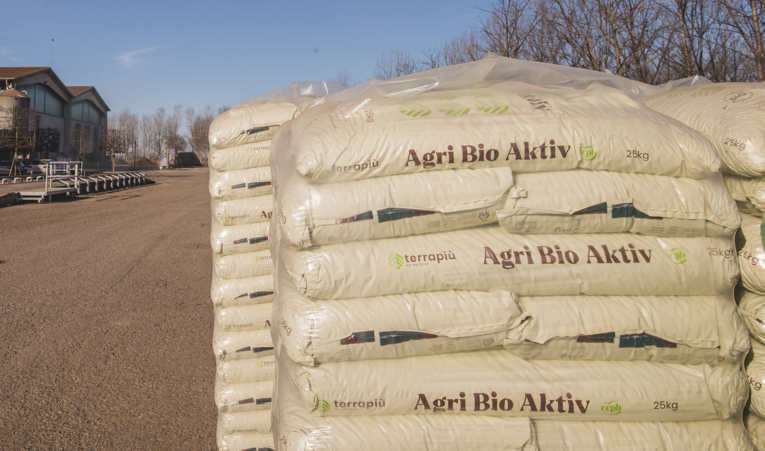
Vista dell'etichetta del concime Agri Bio Aktiv con microrganismi utili aggiunti

Consistency between label and product communication

In summary, to understand the characteristics of a fertilizer it is necessary to rely on the label, which is the only truly authoritative reference. Product communication may be inaccurate or incomplete, and this involves the risk of an incorrect assessment of the fertilizer’s agronomic potential by the operator, with the consequent possibility that the use of the product may not deliver the desired results, which benefits neither the farmer nor the fertilizer industry as a whole.

Paying attention to fertilizer labels is essential in order to make the correct choice, based on effective soil and crop management, and to avoid unnecessary and harmful farm costs and environmental impacts.


Subscribe to the newsletter

Subscribe now
immagine icona della newsletter
Agribios Italiana s.r.l.
Yara