Crop focus •
3 July 2025

Top-dressing fertilization of wheat

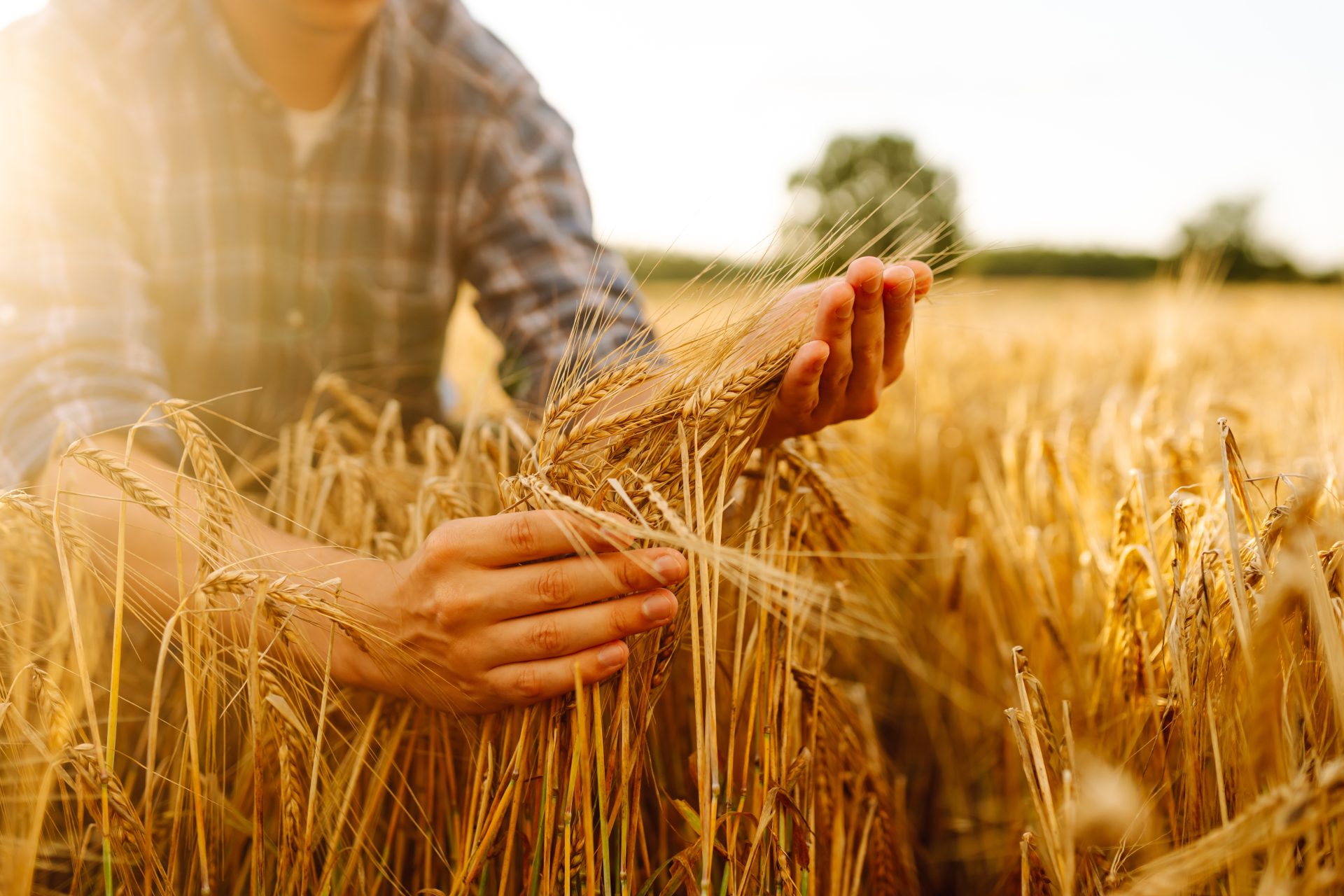
According to ISTAT data, in 2024 Italy produced just over 3.5 million tons of durum wheat, a decrease of 10% compared to the previous season. This was due not only to a reduction in sown areas in autumn-winter 2023 — which amounted to 1.19 million hectares (down by over 6% compared to the previous campaign) — but also to the drought that affected harvests in Southern Italy. From a qualitative perspective, the product did not always meet the industry’s requirements in terms of protein content.

Soft wheat production in 2024 also decreased compared to the previous year, totaling 2.85 million tons, down by 8% compared to 2023. In this case, the main cause was the reduction in yields, as sown areas in 2023, around 600,000 hectares, slightly increased compared to the previous campaign. The incessant rains in Northern Italy, particularly close to harvest time, reduced yields and grain quality, making it necessary to allocate a significant share of the product to animal feed rather than to the milling industry. This situation has increased Italy’s dependence on soft wheat imports, mainly from North America.

Despite the overall decline in wheat areas in our country, the production of Italian organic wheat, both durum and soft, is increasing, with Sicily, Calabria, Apulia, Emilia-Romagna, and Marche leading in terms of cultivated areas. In 2023, organic cereal cultivation in Italy covered over 300,000 hectares, most of which were sown with wheat.

The nutritional requirements of wheat

Wheat needs adequate availability of all three macroelements to achieve satisfactory quantitative and qualitative yields. While phosphorus uptake is relatively constant throughout the growing and productive cycle (which does not exempt us from verifying its actual availability, since it is often present in large quantities in the soil but in insoluble forms), nitrogen and potassium present specific uptake peaks.

Nitrogen uptake shows a first, modest peak during tillering. It then decreases during winter, rises again in spring at stem elongation, and continues to increase until May-June, when it starts to decrease as the plant completes its development and the nitrogen accumulation in the grains is finished.

Potassium uptake peaks during grain formation and filling. In most cases, soils contain sufficient potassium reserves to meet wheat requirements, especially when rotations involve previous crops that leave residues in the field. However, in particularly impoverished soils, potassium inputs through fertilization become necessary.

During the grain filling stage, wheat also shows a peak in sulfur uptake, which is crucial for the synthesis of sulfur-containing amino acids, essential for protein synthesis and thus for final product quality.

Possible wheat fertilization strategies

The traditional approach involves distributing most of the phosphorus and potassium pre-sowing, along with about 30% of the nitrogen, and dividing the remaining 70% into two to three top dressing applications: one before stem elongation, and the others in late spring and summer.

The alternative approach, instead, involves applying a single nitrogen application in spring using slow-release fertilizers, after the initial pre-sowing nitrogen distribution.

Beware of rainy springs

Spring nitrogen applications on wheat must be carefully assessed based on weather conditions. Applying readily available nitrogen formulations during wet springs, such as in 2025, exposes the nutrient to significant leaching losses, with negative environmental and economic consequences.

Leaching risk is particularly high for nitrate nitrogen, but if high rainfall combines with sufficiently warm soil temperatures, nitrification is favored. This is the transformation of ammonium ions (positively charged and retained by the negatively charged soil fractions like clay and organic matter) into nitrate ions, which are negatively charged and thus more prone to leaching.

Furthermore, in water-saturated soils for prolonged periods, excessive rainfall favors denitrification. In this process, nitrate is transformed into molecular nitrogen or nitrous oxide by anaerobic bacteria, such as those of the genus Pseudomonas, resulting in nitrogen losses through volatilization.

Nitrogen for wheat top dressing? Better organo-mineral

The use of organo-mineral fertilizers for wheat top dressing offers numerous advantages.

The nitrogen content, partly readily available — thus able to meet the high nutritional demands of a rapidly growing plant — and partly slow-release, allows for adequate crop nutrition during the critical stages from stem elongation onwards, significantly reducing nitrogen losses through leaching, especially in rainy springs.

At the same time, the organic matter contribution improves soil structure, enhances porosity, and limits waterlogging phenomena, which increase nitrogen losses via denitrification. Improved soil structure also promotes greater rain and irrigation water retention, which is particularly beneficial in case of summer drought.

Moreover, the organic matter contribution revitalizes the soil microbiota, positively influencing nutrient cycles, including phosphorus mobilization, thereby increasing its bioavailability for the crop.

Agribios tips

Agriazoto 300 is a high-nitrogen organo-mineral fertilizer, designed for optimal fertilization of nitrogen-demanding crops. Its specific organic matter composition and nitrogen forms ensure both rapid and gradual release, effectively supporting crop growth and nutrient requirements. Thanks to its unique formulation, Agriazoto 300 adapts perfectly to both dry and particularly wet climates, protecting nitrogen from the main causes of inefficiency (volatilization and leaching).

Biodieci is an organic nitrogen fertilizer obtained by cold pelleting a blend of four different partially hydrolyzed animal protein sources. The size of the natural organic molecules containing nitrogen allows for a gradual release, providing long-lasting availability to the plant. Specifically developed for organic farming, but successfully used in conventional farming as well, Biodieci is applied as top dressing on all herbaceous and tree crops requiring nitrogen inputs. It is also an ideal substrate for enhancing soil microbial activity.


Prodotti correlati

Agriazoto
Agriazoto

Organo-mineral fertilizers

Biodieci
Biodieci

Organic fertilizers

Subscribe to the newsletter

Subscribe now
immagine icona della newsletter
Agribios Italiana s.r.l.
Yara