Digestate and compost are organic products derived respectively from anaerobic digestion and aerobic composting, often promoted as sustainable fertilizers because they enable circular economy practices.
However, their correct use requires awareness that, due to their low C/N ratio and limited humic and fulvic acid content, these products have a limited or null effect on improving soil physical and biological properties. For composts, in particular, the quality of the starting raw materials must be carefully evaluated.
Raw materials and formulations
•
20 February 2026
20 February 2026
Digestate and compost: what agronomic value do they have?
What is digestate?
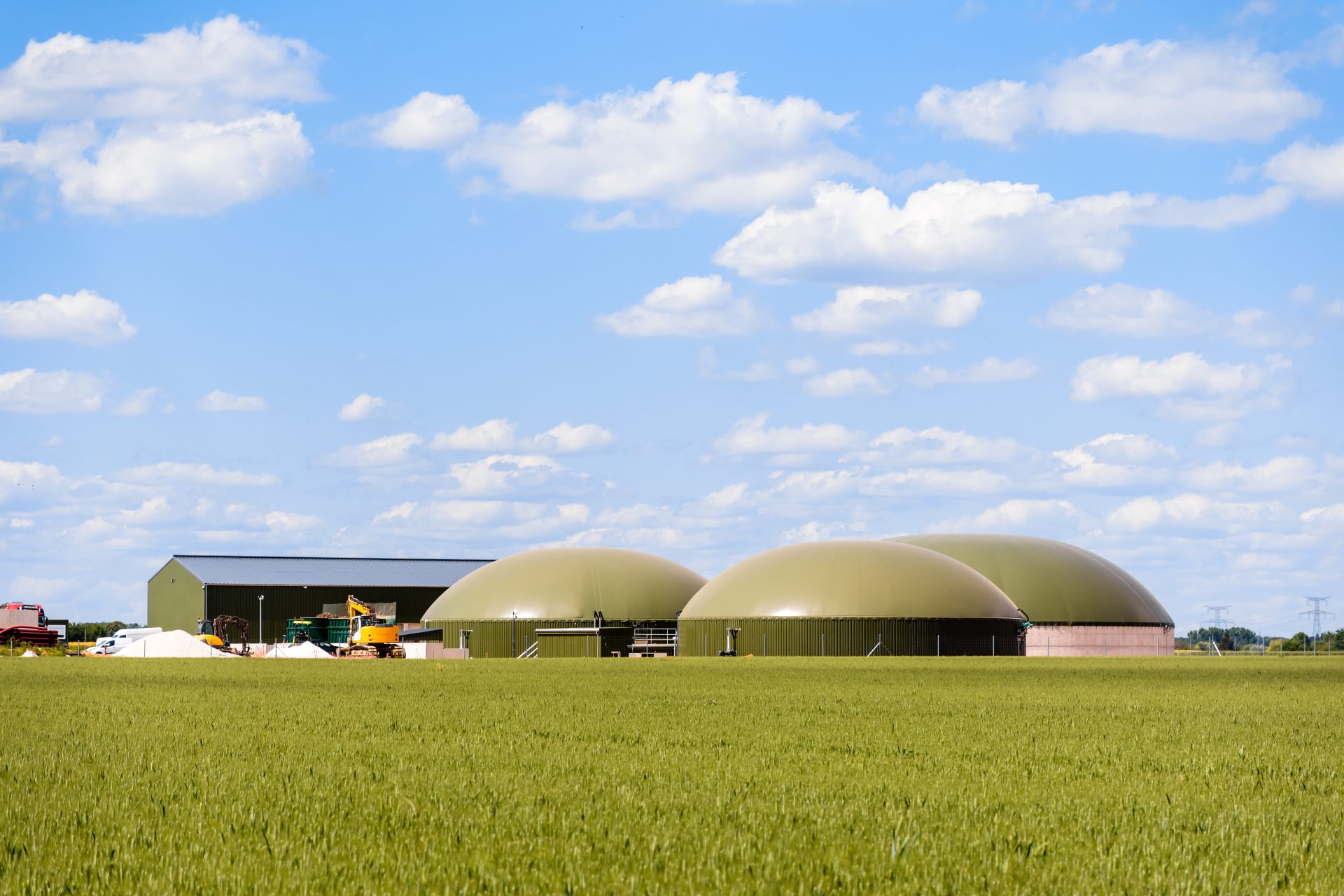
Digestate is the residual material from the anaerobic digestion of organic biomass, of animal, plant or mixed origin, inside biodigesters for biogas production. When subjected to mechanical separation, it yields two types of digestate:
- Liquid or clarified digestate, rich in ammoniacal nitrogen, used as a nitrogen fertilizer;
- Solid digestate, characterized by the presence of organic matter, nitrogen and phosphorus, and used as an amendment.
Law 51/2022, enacted in response to fertilizer supply difficulties triggered by the Russia–Ukraine conflict, recognized agro-industrial digestate as equivalent to chemical fertilizers, thus allowing its agronomic use.
What is compost?
Compost derives from a controlled aerobic decomposition process of organic waste. In agriculture, products belonging to this category are used as soil amendments. The main types of compost are:
- Green Compost Amendment (ACV), produced from green maintenance residues, virgin or exhausted olive pomace, crop residues, and other plant-based waste;
- Mixed Compost Amendment (ACM), produced from the organic fraction of municipal waste (separate collection), anaerobic digestion digestate, animal-origin residues (including livestock manure), agro-industrial waste, untreated wood-processing residues, untreated natural textile residues, and matrices also used for ACV;
- Compost Amendment with Sludge (ACF), produced from wastewater sludge and the matrices used for ACM.
The use of compost in agriculture must be restricted to certified products derived from carefully selected and high-quality matrices. Otherwise, there is a risk of introducing into the soil:
- physical contaminants, such as plastic, glass and metals (common with poorly managed separate waste collection systems);
- chemical contaminants and heavy metals, especially when non-selected urban matrices are used;
- persistent organic contaminants, e.g., pesticide residues;
- weed seeds and pathogens, a risk when composting does not reach sufficiently high temperatures (above 60°C) for adequate durations.
Additionally, if not fully matured, compost may contain substances that are phytotoxic to crops, particularly when applied close to sowing or transplanting. Finally, an incorrect composting process (poor aeration) generates unpleasant odors and potential leachate pollution, if piles are not managed in compliant facilities.
The importance of the C/N ratio
The C/N ratio measures the balance between carbon and nitrogen in organic matter—either already present in the soil or added—affecting microbial dynamics and thus the influence of organic matter on nutrient availability and on soil physical and biological properties.
As highlighted in previous insights, organic matrices added to the soil may have very different C/N ratios. Most microorganisms responsible for organic matter mineralization require a C/N ratio around 24/1, which is optimal for their metabolism.
When this ratio in organic material is higher (as in cereal straw), microorganisms must seek additional nitrogen—usually from soil organic matter—temporarily depriving plants of it.
Conversely, when the ratio is lower, microorganisms consume the carbon in the material and release excess nitrogen, which can be taken up by plants but may also be lost through leaching.
The importance of the humification rate
The humification rate (HR) of an organic matrix is calculated as a percentage using the following formula:
HR = (CHA+FA / TOC) × 100
Where:
- CHA+FA is the sum of humic and fulvic carbon;
- TOC is the total organic carbon contained in the sample.
A high humification rate in the organic matrix of a fertilizer indicates the presence of a large amount of stable organic matter. Humic and fulvic acids positively influence the chemical, physical and biological properties of soil, enhancing biodiversity thanks to their direct and indirect stimulation of soil microbiota.
Conversely, fresh organic matter, low in humification, is rapidly degraded by microorganisms and, in addition to having a reduced ability to improve soil physical structure, may lead to increased CO₂ emissions and nitrogen release peaks, potentially subject to leaching.
C/N ratio and humification rate: comparing matrices
Based on the considerations above, it is useful to compare average C/N ratios and humification rates of digestate, compost and manure.
From the values shown in the table below, it is clear that both digestate and compost are ineffective organic matrices for replenishing stable soil organic matter. Therefore, they cannot regenerate soils or improve their physical and microbiological properties—in other words, they cannot enhance soil vitality.
Other organic matrices are more suited to achieving these goals, particularly well-matured manure, whose maturation process is essential for maximizing humification and eliminating weed seeds and potential pathogenic microorganisms.
As previously emphasized in various insights, not all organic matrices perform equally in agriculture.
| Organic Matrix | C/N Ratio | Humification Rate % |
|---|---|---|
| Liquid digestate | 6–10/1 | 10–15 |
| Solid digestate | 12–18/1 | 15–20 |
| Mature compost | 12–15/1 | 20–25 |
| Mature manure | 20–30/1 | 40–50 |
Agribios tips
Fumier humus super is a 100% natural organic amendment produced using highly selected raw materials (a blend of bovine, equine and poultry manures) and subjected to a long natural fermentation process that promotes the formation of humic and fulvic acids, reduction of pH (to values close to 7), sanitization of the material, ensuring the absence of pathogens, and reduction of moisture content.
Fumier humus super is produced without the use of drying ovens, in order to preserve an organic matter rich in microbial activity, supporting the development of all forms of soil life essential for restoring soil fertility.
The product replaces farmyard manure at a 1:10 ratio (1 ton of Fumier replaces 10 tons of bovine manure) and undergoes continuous chemical and microbiological analyses that certify its nutrient content and the absence of contaminants (heavy metals, parasites, weed seeds).
Prodotti correlati

Fumier humus super
Organic fertilizers


Subscribe to the newsletter
Subscribe now
