Nitrogen Fertilizers: making informed choices

That Nitrogen is essential for crops is a fact. That both deficiencies and excesses of this nutrient element must be avoided—since both conditions negatively affect the health and productivity of cultivated plants—is equally true.

Therefore, when fertilization is needed, how do we choose the most appropriate form of Nitrogen to apply? It is not enough to know how much Nitrogen must be supplied: it is also necessary to understand its dynamics in the soil after application.

As always, let’s proceed step by step.

Why is Nitrogen a fundamental nutrient for plants?

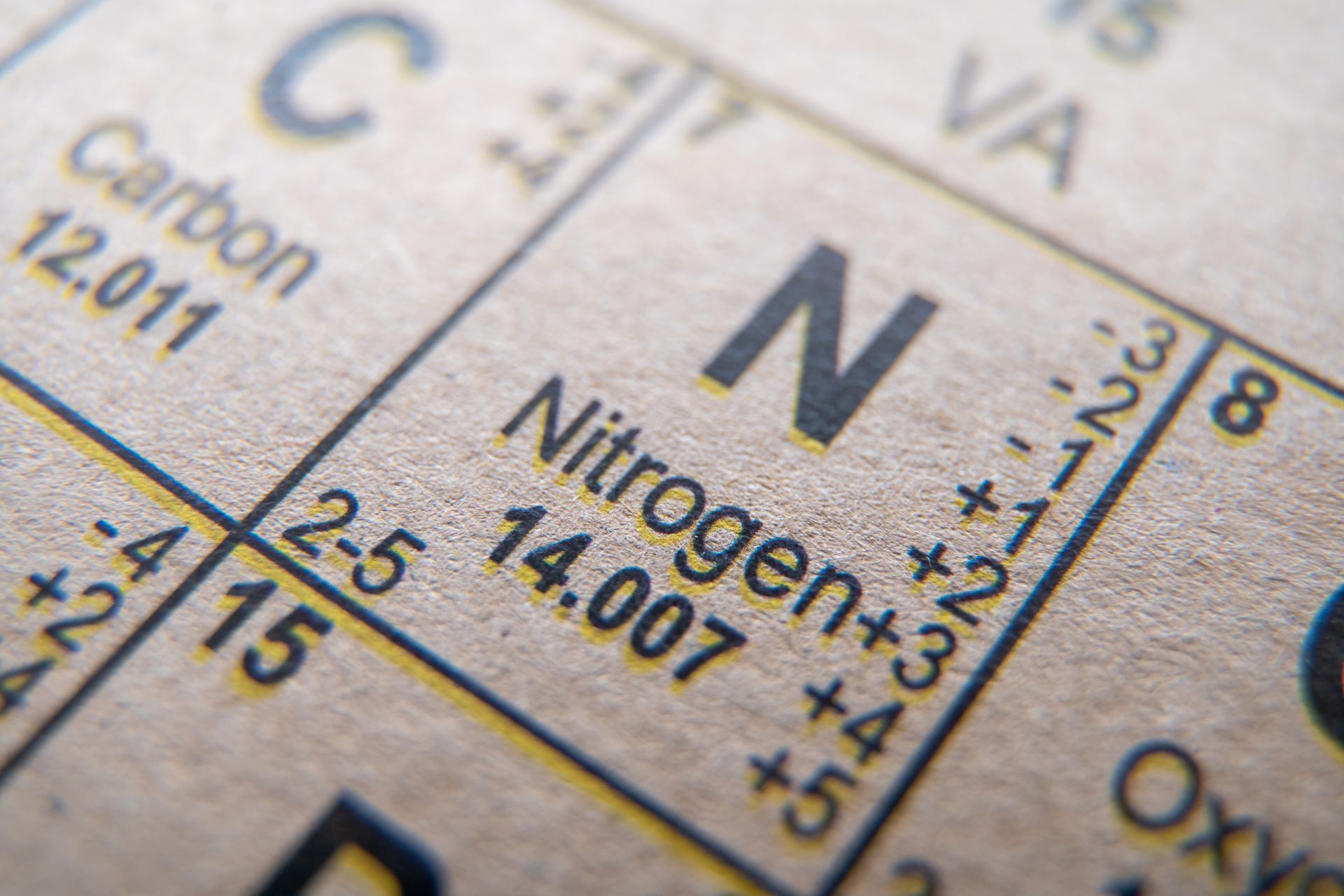
Nitrogen is essential for plant growth, as it is a constituent of proteins and nucleic acids. It is usually absorbed both as ammonium ion and as nitrate ion. The latter, once inside the plant, is subsequently reduced to ammonium ion which, together with carbohydrates produced by photosynthesis, is used in the leaves to synthesize amino acids — the “building blocks” of proteins.

As Nitrogen availability increases, plants tend to produce larger and darker green leaves, which translates into higher photosynthetic capacity and has clearly positive effects on the crop’s vegetative and productive development.

However, when Nitrogen availability exceeds optimal levels, protein synthesis accelerates at the level of the cell plasma, and fewer carbohydrates remain available for the synthesis of calcium pectate, cellulose, etc.—the structural components of the cell wall. Cells tend to increase in size, accumulate more water, and develop thinner walls. This makes the plant more vulnerable to pathogens and insects, as well as to potential mechanical and weather-related damage.

Nitrogen in soil

Nitrogen is found in agricultural soils in three forms:

  • organic, part of humus, which becomes available for plant uptake through mineralization, in the form of ammoniacal and nitric Nitrogen;
  • ammoniacal, weakly available to plants because it is retained by soil clays through adsorption;
  • nitrate, highly soluble in water, not retained by clays, and therefore highly available to plants.

Cultivated plants mainly absorb Nitrogen as nitrates dissolved in the soil solution, although these are also highly prone to leaching, with risks of groundwater contamination and consequences for human health, as nitrates are considered potentially carcinogenic.
Losses of Nitrogen from the soil layers explored by crop roots also occur through denitrification (reduction of nitrates/nitrites to gaseous forms such as molecular Nitrogen or nitrous oxide, released into the atmosphere) and volatilization (losses of ammoniacal Nitrogen).

In general, soil Nitrogen originates from atmospheric Nitrogen through two natural processes: biological nitrogen fixation, performed by soil bacteria, and atmospheric nitrogen fixation, caused by electrical discharges that convert molecular Nitrogen into nitrogen oxides and ammonia, later deposited on soil via rainfall. Humans add additional Nitrogen through fertilization.

There is Nitrogen… and Nitrogen

When soil Nitrogen is insufficient to meet crop demands, fertilization becomes necessary. Nitrogen fertilizers, whether mineral, organic, or organo-mineral, differ based on the chemical forms of Nitrogen they contain, which influence release kinetics and consequently the crop response.

  • Nitrate Nitrogen is the most mobile form in the soil solution and the form most absorbed by plants in aerated soils. It is highly soluble, not retained by the exchange complex, and therefore rapidly available—but also subject to leaching, especially in sandy soils. Once absorbed, it requires metabolic energy to be reduced to ammonium.
  • Ammoniacal Nitrogen can be directly absorbed by roots or transformed into nitrate through microbial nitrification. It is partially retained by clay and organic matter, making it less mobile and less available.
  • Ureic Nitrogen is not directly absorbable. It is rapidly hydrolyzed by urease—an enzyme of microbial and plant origin—into ammonium and bicarbonate, then follows the nitrification pathway. Urea is among the most widely used mineral Nitrogen sources due to its high concentration (≈46% N) and competitive cost, but if not incorporated into the soil, it is prone to volatilization, especially in alkaline soils and with low rainfall after application.
  • Nitrogen from urea-formaldehyde (ureaform) is contained in synthetic condensation products of urea and formaldehyde. It is a slow-release Nitrogen source, where mineral Nitrogen is gradually released by microbial activity, modulated by temperature, moisture, and organic matter content.
  • Organic Nitrogen is contained in organic matter compounds (proteins, amino acids, nucleic acids) and becomes available only after microbial mineralization to ammonium and subsequent nitrification. Release efficiency depends on the C/N ratio, humification degree, and ultimately on the organic matrix used in the fertilizer and how it has been processed.

Organic matrices of animal origin

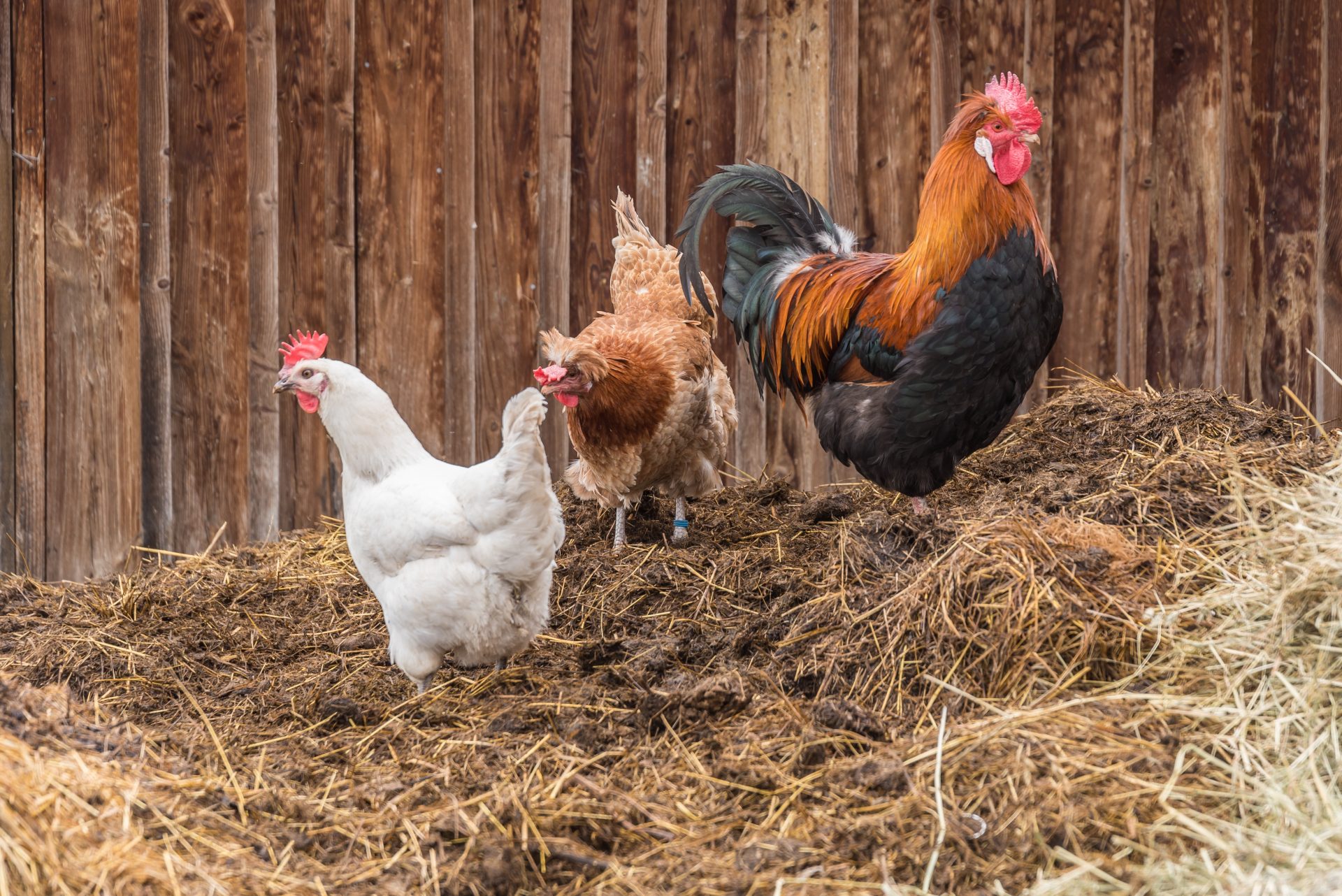
Manure: mixture of animal excreta and bedding material, with variable Nitrogen content. Provides organic matter and secondary nutrients; mineralization speed is medium-slow depending on maturity.

Meat and bone meal: sources of organic Nitrogen and Phosphorus, with slow release tied to protein degradation.

Feather meal: rich in keratin with high Nitrogen content; enzymatic or thermal hydrolysis accelerates availability, making it suitable for organic and organo-mineral formulations.

Horn and hoof meal: by-product rich in Nitrogen (9–16% as is), characterized by slow, long-lasting mineralization.

Hydrolyzed leather: derived from tanning by-products, contains partially available organic Nitrogen with medium release.

Organic matrices of plant origin

Plant-based composts: rich in humified organic matter, with low to medium Nitrogen content; release is very slow.

Oilseed cakes and meals (e.g., soybean, rapeseed): high protein and Nitrogen content with relatively rapid mineralization.

Crop residues and agro-industrial by-products (bran, pulp, vinasse): variable C/N ratios determining diverse release rates.

Chemical forms of Nitrogen and their availability to plants

The “ranking” of Nitrogen forms based on speed of availability under favorable pedoclimatic conditions is:

  • Nitrate Nitrogen (immediate availability)
  • Ammoniacal Nitrogen (rapid–medium availability)
  • Ureic Nitrogen (medium availability, after hydrolysis)
  • Nitrogen from ureaform (slow release)
  • Organic Nitrogen (slow release, variable with matrix)

This parameter alone is not sufficient to evaluate whether a fertilizer meets crop needs in a specific agronomic context. The overall agronomic value of Nitrogen fertilizers must be considered: fast-release forms may have lower efficiency and higher loss risks (leaching, volatilization), whereas slow-release forms, typical of organic and organo-mineral fertilizers, improve nutrient-use efficiency and potentially the overall soil fertility.
The organic matter present in organic and organo-mineral fertilizers not only influences Nitrogen release but also positively affects soil physical and biological properties.

So, which forms of Nitrogen should be applied with fertilization?

Clearly, there is no universal answer, as the variables involved are numerous: crop type and phenological stage, desired yield and product quality, soil characteristics, climatic conditions, and seasonal weather patterns.
However, as we consistently emphasize, when managing crop nutritional needs, one must also consider how to preserve—and if possible regenerate—the health of the soil, in which organic matter plays a key role.

Agribios tips

Agriazoto 300 is a high-N organo-mineral Nitrogen fertilizer, ideal for crops with high Nitrogen demands. The specific composition of its organic matter, combined with the forms of Nitrogen it contains, ensures both immediate and gradual release, supporting the crop throughout its development.

Its organic matter helps maintain soil fertility and protects Nitrogen from volatilization and leaching, improving nutrient efficiency and aligning completely with the “Air Quality Action Plan,” which prohibits urea use in the Po Valley. Agriazoto 300 fully meets the requirements for unrestricted use.

Biodieci is an organic Nitrogen fertilizer obtained by cold pelletizing a balanced blend of four partially hydrolyzed animal protein sources. The size of the organic molecules containing Nitrogen results in gradual release, ensuring extended nutrient availability and minimizing losses of unused Nitrogen units.
Its protein sources define a gradual mineralization curve, beginning with manure and ending with horn meal. Biodieci is designed primarily for organic farming, but is also successfully used in conventional production for topdressing herbaceous and tree crops requiring Nitrogen inputs, ensuring light incorporation to preserve biological activity. It is also an excellent substrate for enhancing soil microbial activity.

Humovegetal 500 is an organic Nitrogen fertilizer based on selected plant matrices, ideal for production systems excluding animal-derived products. It contains exclusive protein-rich plant cakes, abundant in organic Nitrogen, carbon, amino acids, vitamins, and micronutrients.
The organic carbon improves root absorption capacity and overall soil health. It also supports microbial nutrition, mitigates abiotic stress, and enhances nutrient solubility and availability.
The humic acids in Humovegetal 500 stimulate crop growth and improve the efficiency of mineral fertilization thanks to their chelating activity. Its use contributes natural elements that stimulate and revitalize microbial activity and soil fertility within a regenerative agriculture context.

Prodotti correlati

Agriazoto
Agriazoto

Organo-mineral fertilizers

Biodieci
Biodieci

Organic fertilizers

Humovegetal
Humovegetal

Organic fertilizers

Subscribe to the newsletter

Subscribe now
immagine icona della newsletter
Agribios Italiana s.r.l.
Yara